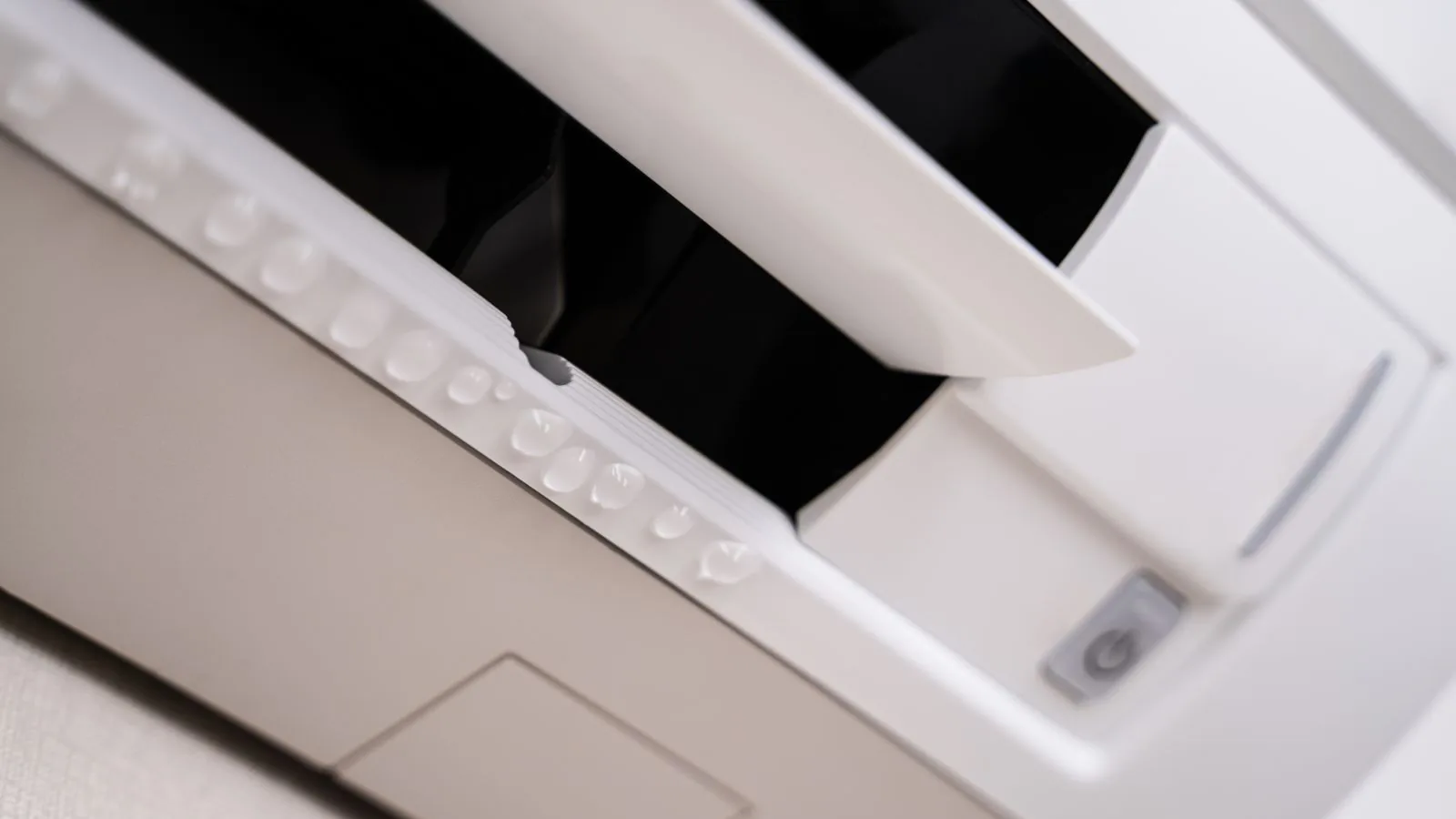
AC leak water damage is the wet damage caused when an air handler drips. Common causes are a clogged condensate drain, a cracked pan or a frozen coil. In West Milford, a leak often appears as a ceiling stain, a wet closet floor or damp insulation around an air handler in an attic or utility space. Dispatch is open 24/7 if the water is spreading.
Turn the unit off at the thermostat and at its switch to stop making condensate. Place a bucket under any drip, and wipe up the pan or floor so water does not spread. Do not run the system again until the drain is cleared.
This page is for the water damage a leak leaves behind. Fixing the unit or clearing the drain is an HVAC technician's work.
The ANSI/IICRC S500 standard for water damage restoration is the published reference for how wet materials are dried, so ask a company how it measures the result.
A drip from an attic unit often stains the ceiling below, and the ceiling water damage repair page explains that repair. Highland Lakes and other nearby towns are covered by the same line.
How an air conditioner leaks inside a home
Cooling pulls moisture out of the air, and that water drains away through a condensate line. If the line clogs with algae, the pan overflows and water runs into the ceiling, wall or floor. A frozen evaporator coil can also melt and overflow the pan.
Because the water is clean and slow, it often goes unseen. A ceiling stain that appears in summer and returns each season points to the drain line, not the roof.
Where AC leak damage shows up
The most common sign is a brown ring on a ceiling under an attic air handler. Others are damp insulation, a musty smell in a closet, soft drywall at the base of a wall, and water in the drain pan itself. Basement and utility closet units leak onto floors and framing.
If the stain sits under an attic unit, the ceiling water damage repair page covers how a wet ceiling is dried and replaced. Repeated stains in one spot often mean the drain is clogging again.
How the crew assesses and repairs the damage
Moisture meters and thermal imaging map the wet area. Wet insulation is removed and replaced. Drywall that has stained but is still firm can often be dried, sealed and repainted.
| Where the leak ended up | Usual response | Notes |
|---|---|---|
| Ceiling drywall | Dry, seal stain, repaint or replace | Soft or sagging drywall is replaced. |
| Attic insulation | Remove and replace | Wet insulation stays damp. |
| Closet or utility floor | Extract, dry, check subfloor | Check for wet framing. |
| Wall base | Dry cavity, replace wet drywall | Water wicks upward from the base. |
Options and honest trade-offs
An HVAC technician clears the drain line and checks the pan and coil. If you only paint over the stain, the leak returns. Drying the area and fixing the source together is cheaper than repeating the work.
If the wet area grows after the unit is fixed, the cause may be something else, such as a roof leak or a plumbing line. In that case, burst pipe water damage explains the sequence when a supply line is involved.
What changes the cost
AC leak repairs are usually smaller than other water losses, but the scope still varies.
Duration
A leak noticed quickly is smaller than one that ran all summer.
Materials
Insulation and drywall are replaced, and ceiling texture may need matching.
Access
Attics and tight utility spaces add labor.
Source repair
The HVAC repair is separate from the water damage work.
Seeing a stain under an air handler? Call and describe the room and the stain size.
Checks that keep a condensate drain from overflowing
A technician can clear the drain line and test the float switch that shuts the system off when the pan fills. Ask for the pan to be inspected for cracks, and ask whether the line slopes properly. A line that dips can hold water and grow algae.
Tell the technician where the stain appeared and when. If the leak is on one floor and the unit on another, that location helps trace the path water took through the ceiling.
What to do before the technician or crew arrives
Turn the air conditioner off at the thermostat so the unit stops making more condensate. Place a bucket under any drip, and keep the power off to a wet air handler until it has been checked.
Do not climb into a wet attic to chase the leak. A sagging ceiling below it is a reason to stay out of that room.
Insurance and AC leaks
Many policies treat a sudden overflow differently from a long-term leak, and some exclude damage from slow seepage. Ask your insurer how an HVAC drain leak is handled. The New Jersey Department of Banking and Insurance guide for homeowners advises prompt reporting and keeping receipts.
Photograph the stain, the pan and the clogged drain line before it is cleaned.
Frequently asked questions
It becomes one if water is spreading, dripping through a fixture or sagging a ceiling. A slow stain can wait for a normal appointment, but turn the unit off and call if it is growing.
Wet insulation and drywall that stay damp can grow mold. Drying the area and fixing the drain reduces that risk.
Ask your HVAC technician. Some recommend vinegar or a drain treatment, and the right choice depends on the unit.
No. An HVAC technician services the unit. We handle the water damage left by the leak.