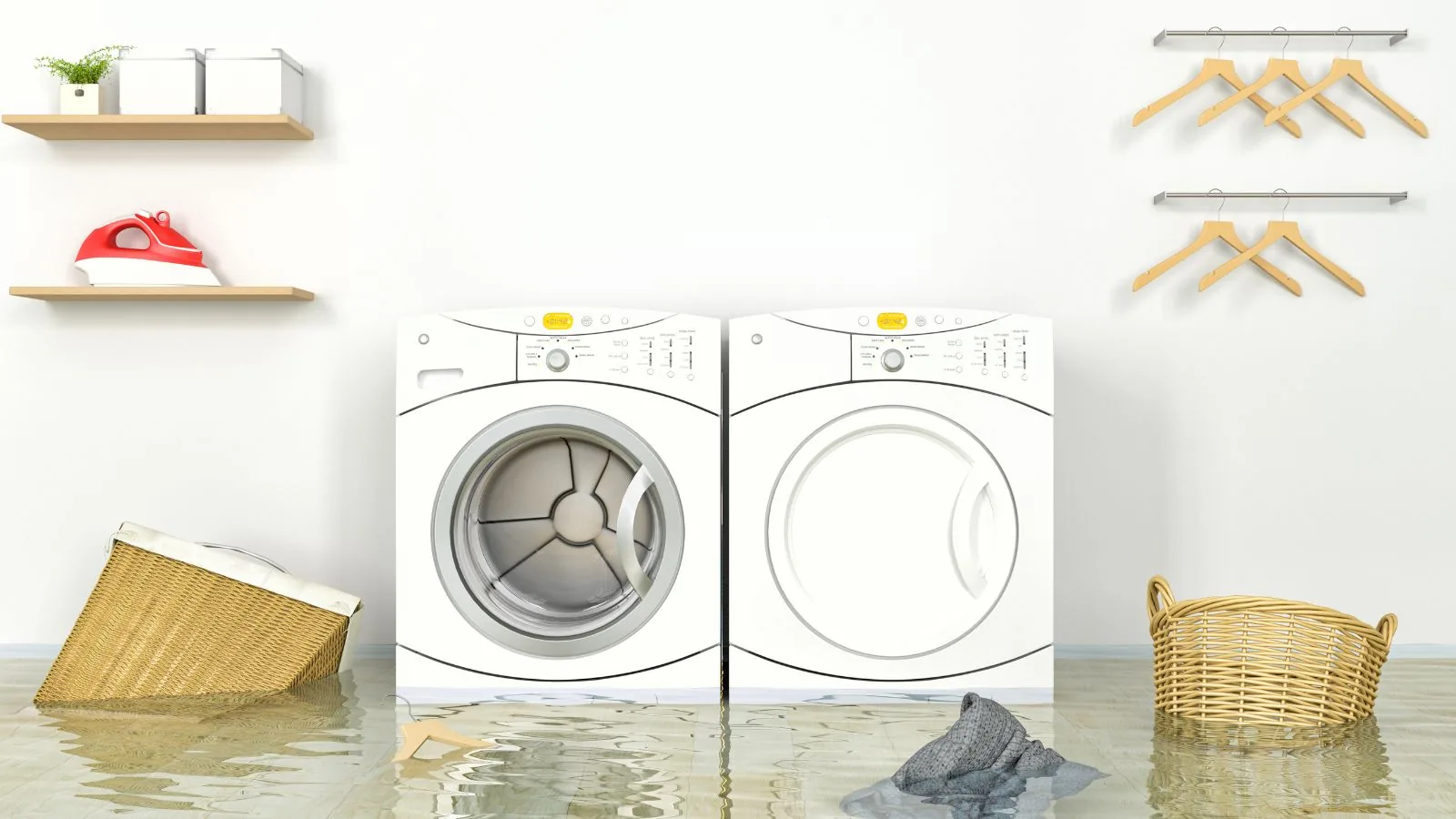
Appliance leak water damage is the wet damage caused by a washing machine, dishwasher, refrigerator, or other appliance that leaks from a hose, valve or drain. A leak in West Milford is an emergency if water is spreading, because laundry rooms, kitchens and basements all have floors that carry water to the next room. Our dispatch line is open 24/7 for appliance leak calls.
Turn off the appliance and unplug it only if the cord and outlet are dry. Close the supply valve behind or beside it, and shut the main water valve if you cannot find it. Move rugs and cardboard boxes away from the wet floor, and keep people away from water around plugged-in equipment.
Appliance leaks are often slow, which is why they cause so much damage. A small leak behind a washer can run for weeks before a stain appears.
If the hose or valve failed upstairs, water often ends up in the ceiling below, which the ceiling water damage repair page covers. The line also covers Bloomingdale and nearby towns.
Appliance leak emergency: when to call right now
Call at once if water is pooling, if it has reached a different room, or if the floor is soft under your feet. A burst washer hose can release water at full house pressure until the supply is closed. A refrigerator or ice maker line can leak into a wall and run behind cabinets.
If the leak is a drip you caught early, dry the area and watch it. If you are unsure how far it went, ask for a moisture check, because floors that look dry can still be wet below.
Where appliance leaks hide
Washers, dishwashers and refrigerators sit against walls, so leaks wet the base of drywall and the subfloor under the appliance. Cabinets around a dishwasher hide a slow leak behind the toe kick. Laundry rooms on upper floors send water to the ceiling below.
Homes in West Milford are often built on sloped lots with finished lower levels, and a leak upstairs can reach a ceiling below. If a ceiling stain appears, the ceiling water damage repair page explains what happens when the drywall is wet.
How the crew finds and dries the water
Moisture meters check the floor, the wall base and the cabinet toe kicks. Thermal imaging shows wet zones that the eye cannot see. If water reached laminate or hardwood, readings decide whether flooring can be dried or has to come up.
| Appliance | Common leak point | Where water goes |
|---|---|---|
| Washing machine | Supply hose, drain hose, door seal | Floor, wall base, ceiling below. |
| Dishwasher | Door gasket, supply line, drain | Cabinet base, subfloor, kitchen floor. |
| Refrigerator or ice maker | Water line, drain pan | Floor under the unit, behind walls. |
| Water softener or humidifier | Fittings, drain lines | Utility area floor, wall base. |
Repair options and trade-offs
The appliance or hose is fixed by a plumber or an appliance technician. Restoration covers the water the leak released. Kitchen cabinets often hide the worst damage, so kitchen water damage restoration covers what happens to cabinets and flooring.
Drying in place works when the leak was found early and the water was clean. Longer leaks need removal of the wet material and replacement, which costs more but removes the hidden moisture.
What changes the cost
These factors decide the scope.
Duration of the leak
A leak found the same day is smaller than a leak found after weeks.
Flooring type
Tile and vinyl dry differently than hardwood or laminate.
Cabinet and wall involvement
Opening toe kicks and wall bases adds time and repair.
Drying time
Equipment stays until readings reach dry standards.
Not sure how far an appliance leak went? Call and describe the appliance and the room.
Hoses, valves and the habits that prevent the next leak
Rubber washer hoses wear out, and braided stainless hoses last longer. Replace hoses on a schedule your appliance maker suggests, and look at the connections when you pull the machine out. A shut-off valve that you can reach is worth more than any other fix.
Do not run a washer or dishwasher while you are away or asleep. A drip pan with a drain under a washer on an upper floor gives a failed hose somewhere to send water. These steps cost little compared with a ceiling replacement below.
Insurance and appliance leaks
Sudden appliance failures are often covered, while long-term seepage is often excluded. Policies differ, so ask your insurer how a washing machine or dishwasher leak is handled. The New Jersey Department of Banking and Insurance guide for homeowners advises reporting a loss promptly and keeping receipts.
Save the failed hose or part if you can, and photograph the appliance and floor.
Frequently asked questions
Yes. The line is open 24/7. A washer hose that fails on a Sunday gets the same response as one on a Monday.
Sometimes. Readings and how long it was wet decide. Quick drying can save the boards, while long exposure often warps them.
Yes. Slow leaks wet the subfloor and wall base for a long time, and mold can grow in damp materials.
No. An appliance technician or plumber repairs it. We handle the water damage and drying.