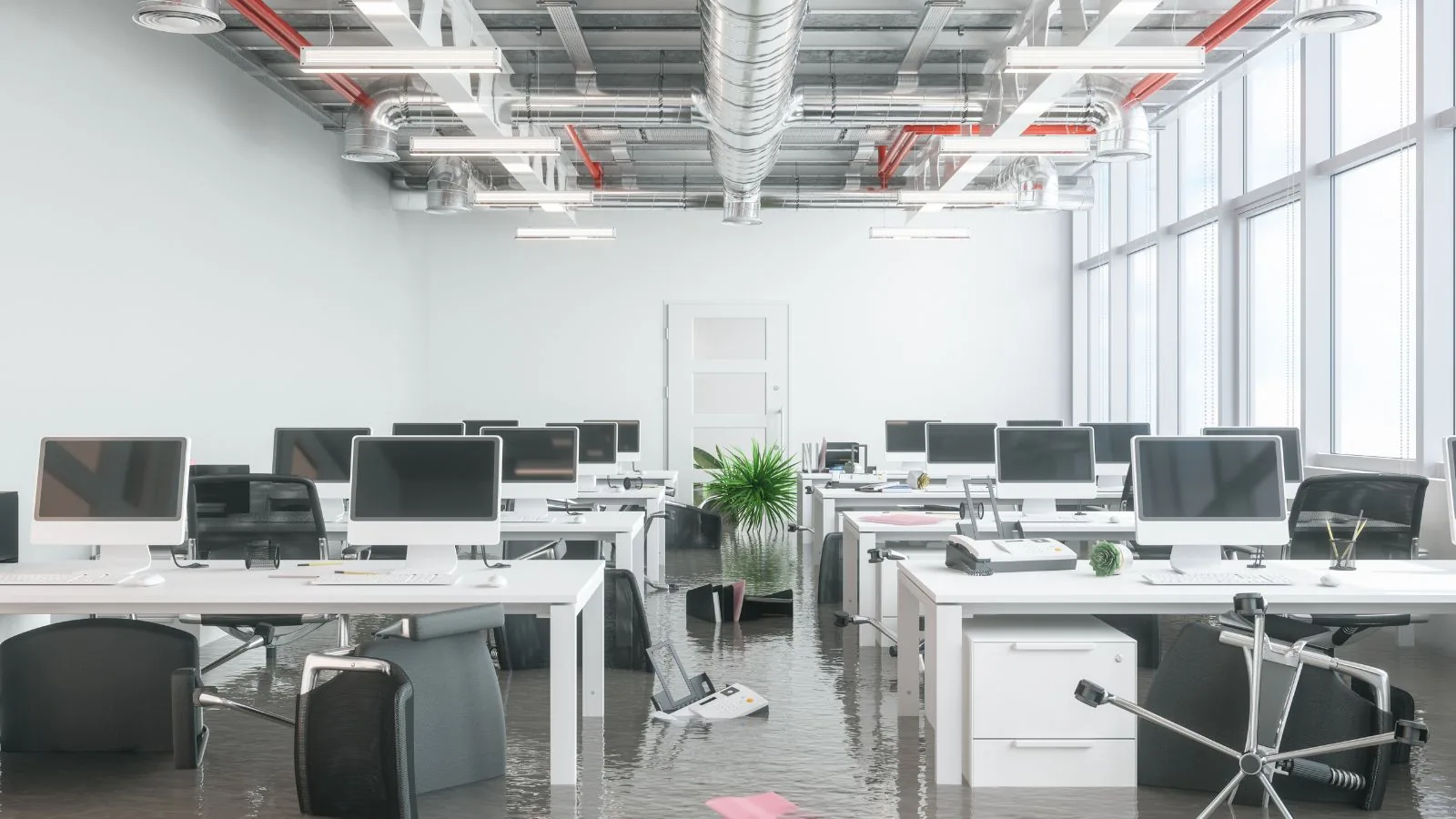
Commercial water damage restoration is the removal of water, drying and cleanup in a business property after a pipe failure, roof leak, sprinkler discharge or flood. In West Milford, a leak in a shop, office or rental building is an emergency, because a closed business loses time with every hour and wet materials get worse. Our dispatch line is open 24/7, including nights and weekends.
If you are the owner or manager, close the main water valve, keep staff and customers out of wet areas and turn off power to affected rooms only if it is safe to reach the panel. Move inventory, files and electronics to dry ground and note what you moved. Call your landlord or property manager if you lease the space.
Commercial losses involve more decisions than a home does, from tenants and landlords to insurance and downtime.
If the loss started with a roof or storm, the storm water damage cleanup page may apply too. Dispatch also covers businesses in Butler and Bloomingdale.
Commercial emergency: first hour for a business
Stop the water, protect people and protect records. Shut off the source, keep traffic out of wet areas and photograph everything before it is moved. If the water came from a sprinkler line or a shared system, tell the property manager at once.
Tell the dispatcher what kind of space it is, how many rooms are wet and whether the building is occupied. That helps plan the crew and equipment.
Business districts and buildings in West Milford
Commercial properties here include shops and offices along the Union Valley Road and Route 23 corridors, plus small plazas, restaurants, offices and rental buildings. Older buildings may have mixed plumbing and roofing, and some have lower levels or storage areas that collect water.
Because many are small or mid-size buildings, a single leak can affect several tenants. The crew explains the scope in writing before work starts, which helps owners and tenants agree on what is being done.
How commercial drying and cleanup are handled
Commercial work follows the same steps as residential work, but at a larger scale and with more planning. The crew extracts water, protects equipment, measures moisture and dries the structure in phases to limit downtime.
| Space type | Common concern | Approach |
|---|---|---|
| Retail or restaurant | Floors, stock, equipment | Extract quickly, dry in sections so the space can reopen sooner. |
| Office | Carpet tile, drywall, electronics | Dry in place where possible, protect records. |
| Rental building | Multiple units affected | Isolate units, coordinate with the property manager. |
| Storage or lower level | Stored goods and floors | Move contents, extract and dry. |
Options, phasing and honest trade-offs
Drying faster is possible with more equipment, but it costs more and can make a space noisy. Phased drying lets part of a building reopen while another part is still being dried. Ask which option fits your business.
If water came from a roof or ceiling, the ceiling water damage repair page explains what happens to the ceiling. For lower levels, see basement water damage cleanup.
What changes the cost
Commercial scope varies widely.
Area and building type
Larger or more complex buildings need more equipment and labor.
Contents and inventory
Moving and protecting stock adds time.
Phasing and access
Working around business hours affects the schedule.
Drying days
Equipment stays until readings reach dry standards.
Business affected? Call and describe the space so the dispatcher can plan the response.
What to gather for your insurer and your landlord
Collect the lease, the insurance policy number, photographs of the loss and a list of damaged inventory and equipment. Write down the time you found the water and who you called. Keep receipts for any emergency work.
If you share a building, tell neighboring tenants and the property manager right away. A leak in one unit often reaches others, and a written record of when each party was told prevents later disputes.
What to do before the crew arrives at a business
Move people out of any wet area, close it off and shut the water at the main or the nearest zone valve. Turn off power to wet circuits at the panel only if it is dry and clearly labeled.
Photograph the damage and the source, protect records and electronics by lifting them above the water, and write down who was on site when it happened.
Insurance for commercial losses
Business property policies differ, and some include business interruption coverage. Ask your insurer what applies, and ask your landlord who is responsible if you lease the space. We document the damage and explain the scope. We do not promise how a claim will be decided.
Keep receipts, photos and a list of affected inventory and equipment.
Frequently asked questions
Yes. The line is open 24/7, which matters when a business needs to reopen quickly.
Often yes. Phasing and scheduling can limit disruption, and the scope is explained before work starts.
That depends on the lease and the source of the water. Check your lease and ask your insurer.
Scope is discussed on the call. The dispatcher will explain what is possible for your property.