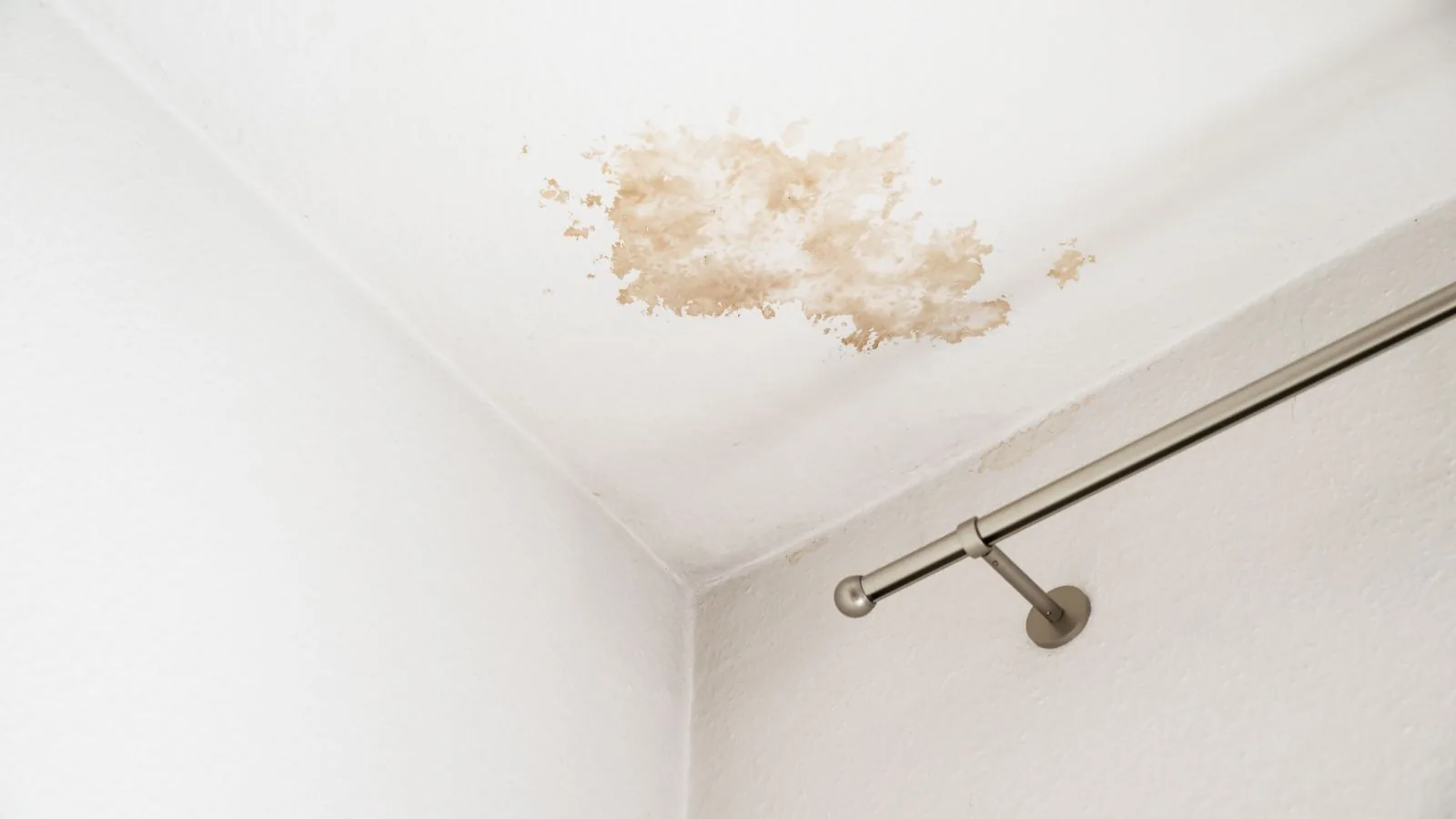
Ceiling water damage repair means finding where water entered, drying the ceiling and the framing above it, and replacing the drywall that was ruined. A ceiling that is dripping, bulging or sagging in West Milford is an emergency, because trapped water can bring the drywall down. Our dispatch line is open 24/7, and the page also covers roof leaks that cause these stains.
Keep people out from under a bulging ceiling. If it is safe, place a bucket under a drip and poke a small hole in the lowest point of a bulge to let trapped water drain into a container, then step back. Move furniture and electronics away, and shut off power to a room if water is dripping through a light fixture.
Water in a ceiling usually comes from one of three places: the roof, a plumbing line above, or an air conditioner or water heater in the attic.
Ask whether the crew follows the ANSI/IICRC S500 standard, since it sets the expectations for drying wet framing and insulation above a ceiling.
Water that ran down a wall may also need the wall and drywall repair page. The line covers Highland Lakes and nearby towns.
Sagging ceiling emergency: what to do right now
A ceiling stain that grows, darkens or bulges means water is still arriving or still trapped. Drywall softens when wet and can collapse in a sheet. Do not stand under it, and do not push on it.
Call the line and describe the stain. If a bulge is present, say so. We will tell you what to do while a crew is dispatched, and the first goal is relieving the water safely.
Roof leaks and ice dams in West Milford
The township's groundwater study puts normal annual precipitation at 51.4 inches. That much rain and snow tests every roof, flashing and gutter. Water that backs up behind ice at the eaves can seep under shingles and show up as a stain on the ceiling days later.
A roofer fixes the roof. The restoration work starts with the ceiling, insulation and framing the water reached. If the leak followed a storm with wind-driven rain, the storm water damage cleanup page covers the wider damage pattern.
Plumbing and equipment leaks above a ceiling
Not every ceiling leak starts on the roof. A supply line, a bathroom above, a water heater in the attic, or an air handler drain pan can all overflow. If the stain appears under a bathroom or near a unit, the source may be plumbing.
Condensate lines from an air conditioner clog and back up, which is covered on the AC leak water damage page. A leak from a bathroom above is often a supply-line or drain issue, and the plumber finds it.
How the ceiling is assessed and repaired
The crew checks moisture in the ceiling, insulation and joists, and uses thermal imaging to see the wet area. Dry in place only works when the drywall is intact and the water was clean.
| Ceiling condition | Likely approach | Reason |
|---|---|---|
| Light stain, no sag | Dry in place, then seal and repaint | Drywall is still firm. |
| Bulging or soft | Release water, cut out the wet section | Trapped water and weakened drywall. |
| Wet insulation above | Remove and replace | Wet insulation stays damp for a long time. |
| Repeated stains in one spot | Find the source before repairing | Painting over a live leak brings the stain back. |
What changes the cost of ceiling repair
Costs depend on scope. These are the main drivers.
Size of the wet area
A single stained panel is a small repair. A whole room is much more.
Insulation and framing
Wet insulation is removed, and framing is dried before closing the ceiling.
Access and height
Vaulted ceilings and tight attics add labor.
Finish work
Texture, paint and trim matching are part of the repair stage.
Seeing a stain spread? Call and describe where it is and whether the ceiling is sagging.
Attic insulation, ventilation and the next leak
Wet attic insulation compresses and loses its value, and it can hold water against the ceiling drywall for weeks. A crew removes the wet section and replaces it, and the roofer or HVAC technician fixes the source. Ask whether the attic is ventilated, because a damp attic that never dries invites a repeat stain.
Look for ice dam signs in winter, such as icicles along the eave or water stains near exterior walls. If you see them after a thaw, take photographs before the ice melts away.
Insurance and ceiling leaks
Sudden leaks from a storm or a burst line are often covered, while long-term seepage and wear are often not. Ask your insurer about roof leak coverage and your deductible. The New Jersey Department of Banking and Insurance guide advises policyholders to make temporary repairs and keep receipts.
Photograph the stain from several angles, and note when you first saw it. Do not paint until the source is found and the ceiling is dry.
Frequently asked questions
Yes. The line is open 24/7. A ceiling that starts to sag at night gets the same response as one found at noon.
Not until the source is fixed and the ceiling is dry. Painting over a live leak hides the problem, and the stain returns.
No. A roofer repairs the roof. We handle the water damage inside the home, and we can work alongside the roofer.
A roof leak usually appears after rain and is worst near an exterior wall or the roof peak. A plumbing leak appears regardless of weather, often below a bathroom or equipment.