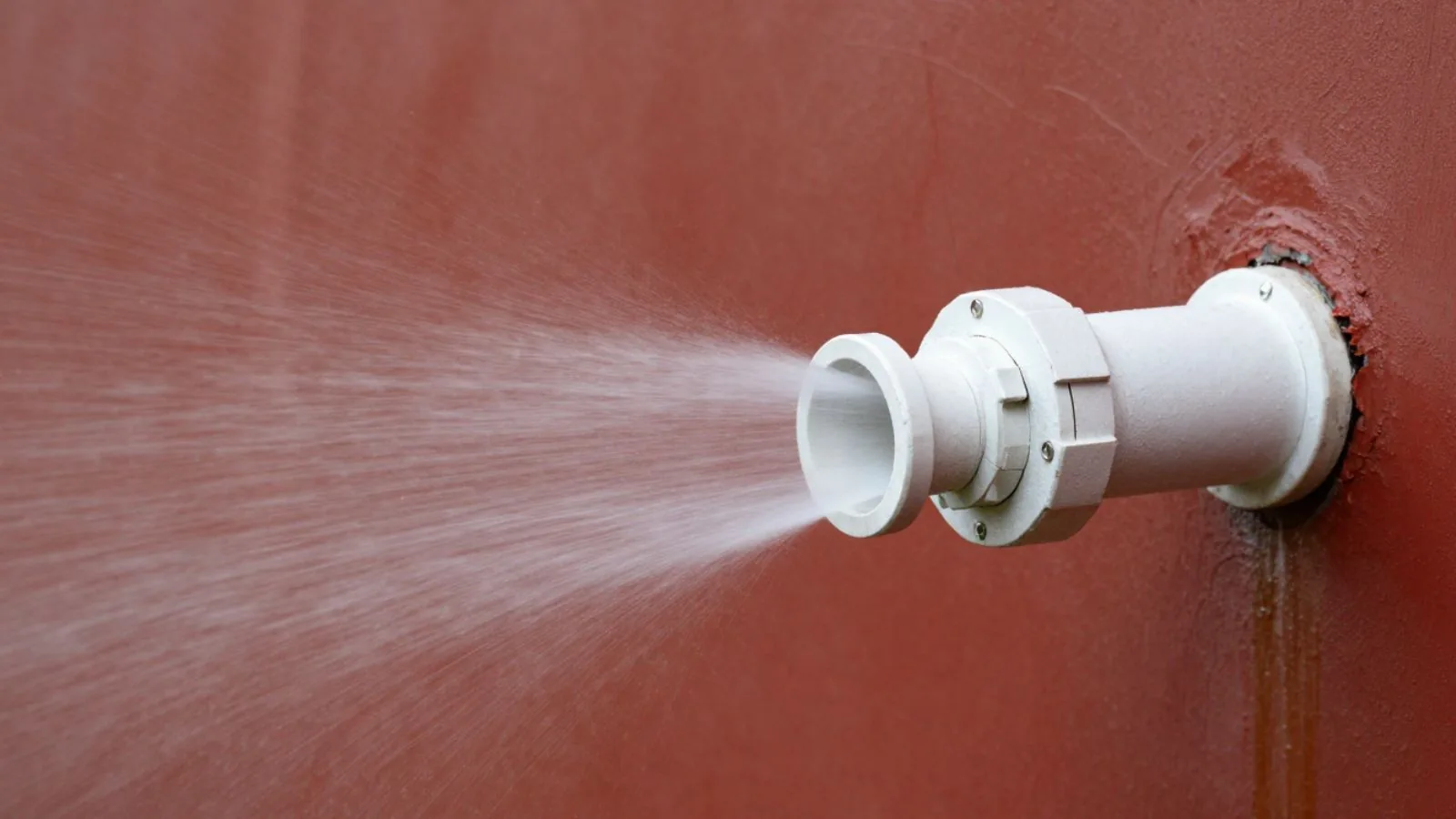
Frozen pipe water damage is the water released when ice splits a pipe or fitting and the line thaws or the pressure comes back on. In West Milford the damage is often hidden until the pipe thaws, so a quiet wall can turn into an emergency within minutes. Our dispatch line is open 24/7 for these calls, including holidays and overnight.
If you suspect a frozen line, shut off the main water valve before you try to thaw anything. Open the faucets nearest the frozen section so melting ice has somewhere to go, and keep space heaters and open flames away from wet areas. Never thaw a pipe with a torch, and leave the work to a plumber if you cannot see the pipe.
Water from a thaw usually runs inside the building envelope first, so the damage often shows up as a stain, a drip or a puddle far from the pipe.
Once the line is repaired, the structural drying page explains how the walls are dried. The same line covers Ringwood and its lake communities.
Frozen pipe emergency: signs the line has split
A pipe that froze but did not split gives you low pressure or no water at one fixture. A pipe that split often shows itself only after it thaws, with dripping inside a wall, a wet ceiling or a sudden drop in well pressure. Water that sprays or runs from a ceiling is an emergency, and the main valve comes first.
If you find a split, take a photo of it before the plumber repairs it. That photo helps an insurance claim, and it helps the crew confirm how much water ran.
Why pipes freeze in this part of New Jersey
The township covers about 80 square miles, with ground elevations from under 320 feet along the Wanaque River to more than 1,400 feet near Bearfort Mountain, according to its own groundwater study. That range means exposure to wind and cold differs a lot from one neighborhood to the next. We do not have a published local count of freeze days, so we describe the mechanism instead of a frequency.
Pipes freeze where cold air reaches them. That means exterior walls, uninsulated crawl spaces, garages, and lake houses that were built as summer places and later became year-round homes. Shutting heat off in a seasonal home without draining the plumbing is a common setup for damage you find in spring.
How the damage is found and dried
After the leak is stopped, the crew checks for moisture along the pipe run. Frozen splits often release a large amount of water into a small area, so drywall, insulation and the subfloor below get saturated quickly. Thermal imaging and moisture readings show the true edge of the wet zone.
| Where the pipe froze | Common damage | Usual first step |
|---|---|---|
| Exterior wall | Wet insulation and drywall, stained baseboards | Open the cavity and dry it. |
| Crawl space or basement ceiling | Wet floor above and wet insulation below | Remove saturated insulation, dry the framing. |
| Garage or unheated room | Standing water, wet drywall at the wall base | Extract, then dry the base of the walls. |
| Attic line | Ceiling stain that spreads and may sag | Release trapped water before it fails. |
Repair options and honest trade-offs
A plumber repairs the split. The restoration work depends on how long water ran and what it reached. Drying wet insulation in place is rarely effective, so most wet batts or loose-fill in a wall are removed and replaced.
If the water reached the ceiling below, the ceiling water damage repair page explains when a ceiling has to come down. If a line burst under pressure rather than slowly thawing, the burst pipe water damage page covers that sequence.
What changes the cost after a freeze
No flat price covers every freeze. These are the four biggest factors.
How long the line leaked
A split found within minutes is a smaller job than one that ran while nobody was home.
Hidden wet areas
Wall and ceiling cavities need opening, and the number of openings changes the scope.
Insulation and finishes
Wet insulation is removed, and paint, trim and flooring may need repair after drying.
Drying time
Equipment stays until readings are normal, so older framing and tight spaces take longer.
Found a split after the thaw? Call and describe where the pipe is.
Insurance and frozen pipes
Many policies cover a sudden freeze burst. Some ask the owner to have kept the heat on or the plumbing drained in an empty home. Check your own policy for those conditions and ask your insurer if the language is unclear. The New Jersey Department of Banking and Insurance guide for homeowners recommends reporting a loss promptly and keeping receipts for temporary repairs.
We do not promise a claim result. We do document the affected rooms and explain the scope.
Frequently asked questions
Yes. The dispatch line is open 24/7. Pipes tend to thaw and leak overnight and on weekends, and those calls get the same response as weekday calls.
If the pipe is accessible and not split, gentle warmth from a hair dryer is the safest method. Never use a torch or open flame, and leave the main valve closed until a plumber confirms the line is intact.
Yes. Ice can crack a fitting and the leak starts only when pressure returns. If any fixture shows low pressure after a cold night, check the walls and ceilings below for damp spots.
A home with the heat off and the lines full is at higher risk, because there is no one to notice a leak. A plumber can winterize a seasonal home by draining the lines.