Hardwood floor water damage repair is the drying of wood floors soaked by a leak, spill or flood. Where needed it includes sanding, refinishing or replacement. In West Milford, floors over crawl spaces and basements are exposed to moisture from below as well as above. Dispatch is open 24/7 when water is still spreading.
Wipe up standing water, lift rugs and furniture and keep the area ventilated. Do not use heat guns or fans aimed at the boards, because rapid drying can crack them. Photograph the floor and note when it got wet.
Hardwood takes on water through the seams and the underside, and it releases it slowly.
The ANSI/IICRC S500 standard is the published reference for drying water-damaged materials, and a crew working on hardwood should be able to describe how it applies.
Signs hardwood has been damaged by water
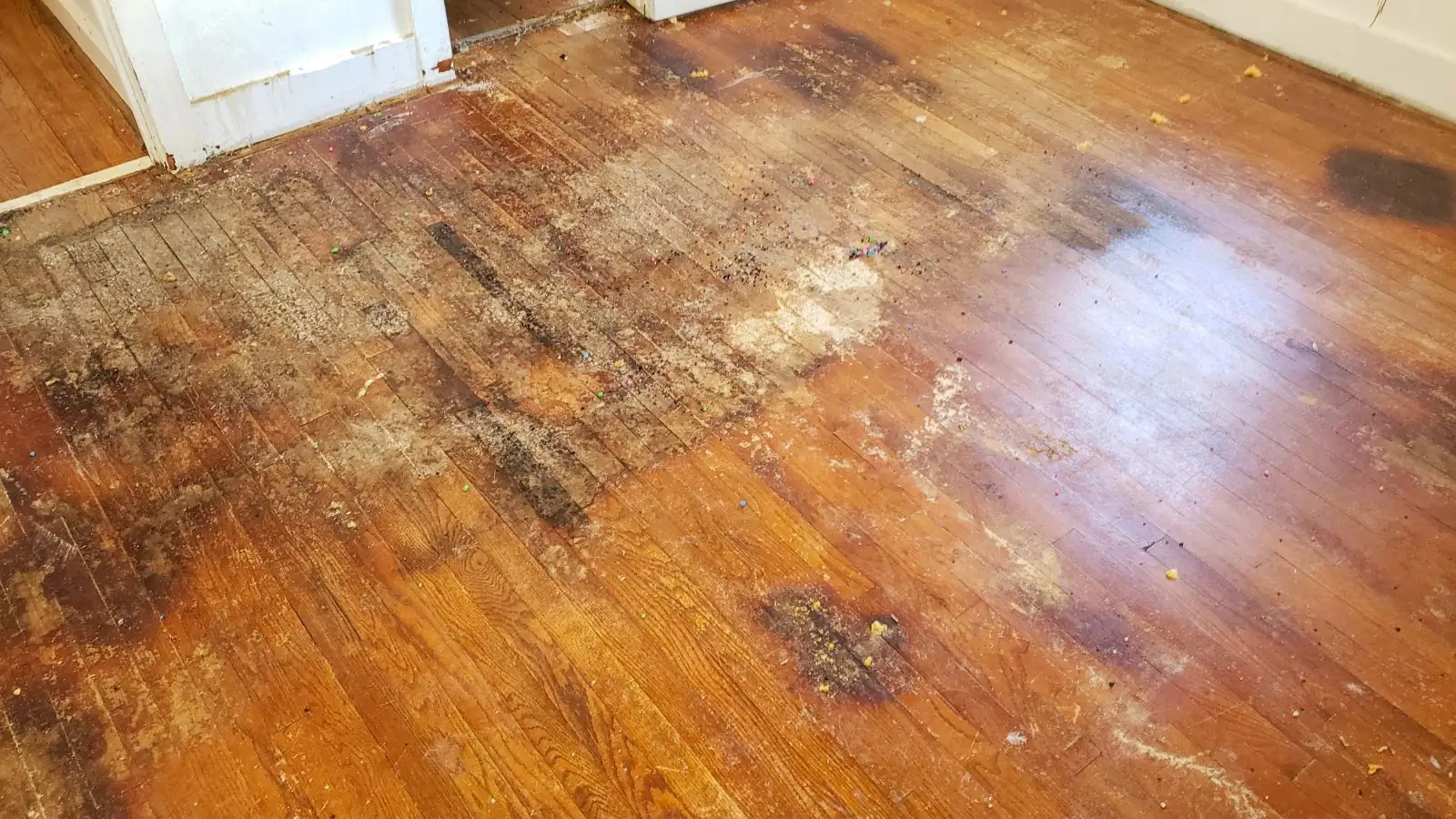
Cupping means the edges of boards rise higher than the center. Crowning is the reverse. Other signs are gaps, black or gray stains, a sticky finish, a musty smell and boards that lift at the ends.
Each pattern points to a different cause. Cupping often comes from moisture below. A leak above tends to stain and lift boards. A moisture meter helps tell them apart.
Where moisture from below comes from here
Floors over crawl spaces and basements pick up moisture from the ground. The township's groundwater study notes about 51.4 inches of normal annual precipitation and slopes that favor runoff. After wet seasons, a damp crawl space can send moisture up into the subfloor and boards.
If water came from a leak above, the kitchen water damage restoration page covers a common source. If the crawl space is the cause, see crawl space water damage.
How hardwood is dried
Quick drying helps. The crew extracts water, removes baseboard if needed, and uses drying mats or panels that pull moisture out through the boards. Dehumidifiers and air movers lower the moisture in the room.
| Floor condition | Likely outcome | Notes |
|---|---|---|
| Light cupping, wet briefly | Often dries flat | May need light sanding. |
| Heavy cupping or buckling | Often replaced | Boards have deformed. |
| Water under the floor | Dry from below if possible | May need boards lifted. |
| Black stains | Often replaced | Staining runs deep into the wood. |
Repair options and honest trade-offs
Drying and refinishing costs less than replacement, but it only works when the boards have not been permanently deformed. Replacement is more expensive and gives a new floor. Matching old boards can be hard, so ask about options.
Wait for moisture readings to reach normal before sanding or refinishing. Refinishing wet wood traps moisture. If wet drywall is nearby, see wall and drywall water damage repair.
What changes the cost
Costs depend on the floor and the water.
Area affected
More square feet means more drying panels and time.
Board condition
Deformed boards are replaced.
Finish work
Sanding and refinishing are separate steps.
Drying time
Wood dries slowly and carefully.
Hardwood wet or cupping? Call and describe the floor and how it got wet.
What to ask before sanding or replacing
Ask for moisture readings in the boards and the subfloor on more than one day, and wait until they are stable. Ask whether the boards are solid or engineered, because engineered flooring has a thin top layer that cannot be sanded many times. Ask what finish matches the rest of the floor.
If the cause was a crawl space or basement, ask what will keep moisture from coming back. A fixed floor over a wet space is a short-term repair.
How long to wait before refinishing
Hardwood that has cupped usually needs time to flatten as it dries, and sanding too early can leave the boards with ridges once they settle. The crew tracks moisture in the boards and the subfloor, and the floor is considered ready when readings return to the normal range for the room.
That can take longer than homeowners expect, sometimes weeks for a heavily wet floor. Waiting is cheaper than sanding twice, and it keeps the finish from failing over damp wood.
Insurance and hardwood floors
Coverage depends on the cause. A sudden pipe or appliance failure is often covered, while gradual moisture and flooding often are not. Ask your insurer, and note that the New Jersey Department of Banking and Insurance guide for homeowners says flood damage is excluded from homeowners policies.
Photograph the floor before and during drying.
Frequently asked questions
Sometimes, if it dries slowly and was not wet too long. Moisture readings show whether it has recovered.
No. Wait until the wood is dry, or the finish will trap moisture.
If the crawl space is wet, fix that source first. Otherwise the floor can cup again.
If water is spreading, call the 24/7 line. Fast drying matters.