Carpet water damage restoration is the extraction and drying of carpet and pad after a leak, flood or spill. It also covers replacing what cannot be saved. In West Milford, carpet in finished basements and lower levels is exposed to the most water. Dispatch is open 24/7 when water is on the floor.
Remove loose items from the carpet, lift furniture legs onto foil or blocks, and open windows if the weather allows. Do not use a household vacuum on wet carpet. Photograph the wet area before any cleaning.
The key question is the source of the water. Clean water from a supply line is different from floodwater or sewage.
For carpet, the published ANSI/IICRC S500 water damage standard is a useful benchmark, and a crew should be able to explain how it handles pad that cannot be dried.
Can wet carpet be saved?
Often yes, if the water was clean and the carpet was extracted quickly. Pad is the weak point. It holds water, is cheap to replace and is usually removed. Carpet that sat in contaminated water is usually discarded.
The crew checks the water category, how long the carpet was wet and what it sits on. If it is wall-to-wall carpet, the crew may lift a corner and float it so the subfloor can dry. That step is covered on the structural drying page.
Why finished lower levels in West Milford see the most carpet damage
The township's groundwater study reports about 84 percent of the township has slopes that favor runoff, and normal annual precipitation is 51.4 inches. Carpeted lower levels sit where that runoff ends up. A sump pump failure during a storm is a common way a carpeted basement gets wet.
If water came through a foundation wall, the basement water damage cleanup page explains the larger scope. If the source was a plumbing failure, the burst pipe water damage page covers that sequence.
How carpet is extracted and dried
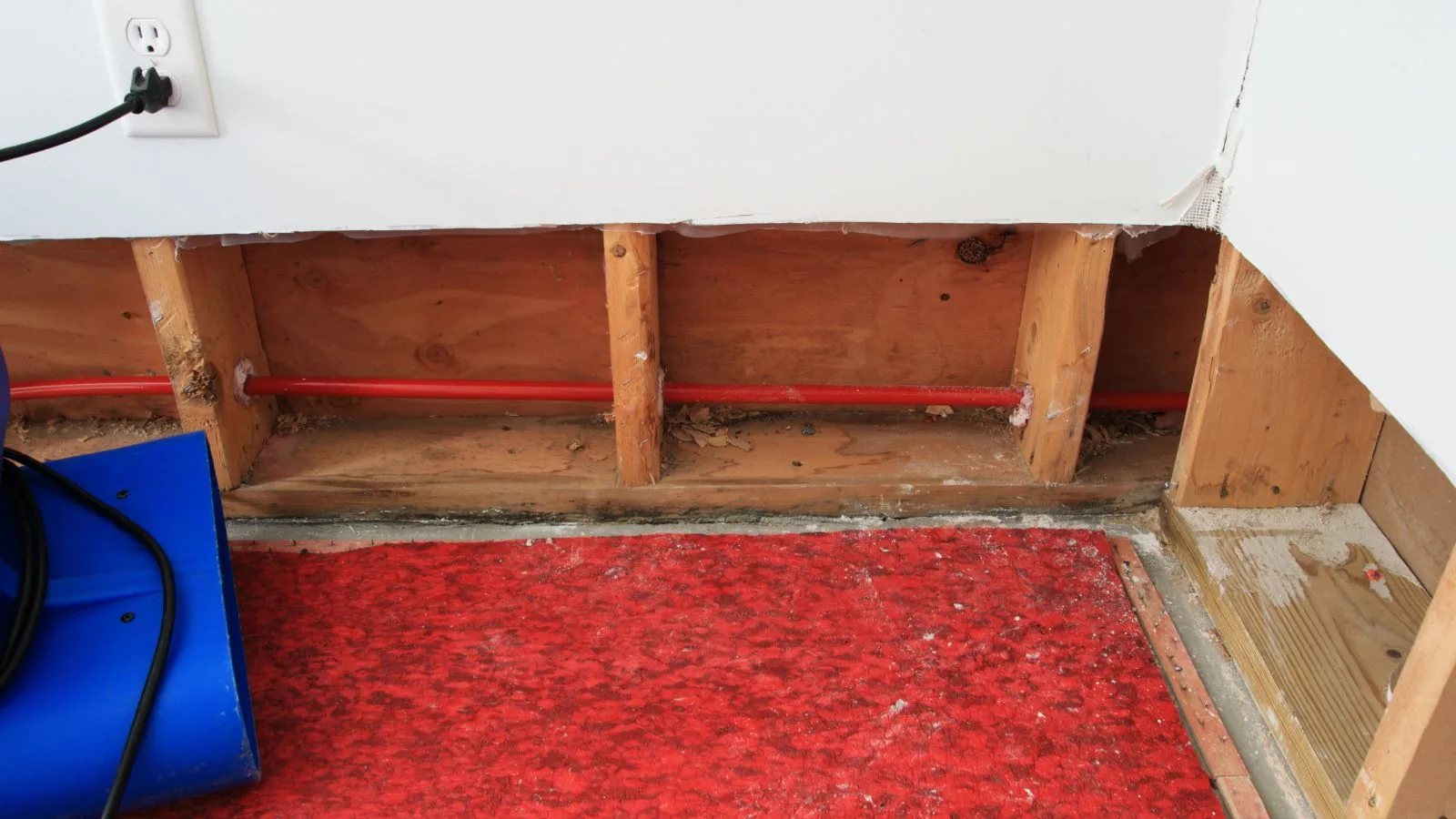
The crew extracts water with a truck-mounted or portable unit, removes the pad, sets air movers to blow air under the carpet and runs dehumidifiers. Moisture readings tell when the carpet and subfloor are dry.
| Water source | Carpet outcome | Pad outcome |
|---|---|---|
| Clean supply line | Often saved if dried quickly | Usually replaced. |
| Gray water (appliance drain) | Case by case | Replaced. |
| Floodwater or sewage | Usually discarded | Discarded. |
| Long-term damp | Often discarded | Discarded. |
Repair options and honest trade-offs
Drying carpet in place costs less than replacing it. Replacement is the safer choice when water was contaminated, the carpet is old or the backing has delaminated. New pad is almost always part of the job.
If the carpet was wet for several days, ask whether the subfloor has been checked. Wet carpet can hide wet wood below.
What changes the cost
Carpet jobs depend on size and condition.
Water category
Clean water leaves more options than contaminated water.
Area
Wall-to-wall carpet in a large room takes more equipment.
Time wet
Longer exposure means more damage.
Replacement
New carpet and pad are a separate stage.
Carpet wet? Call and describe the room and the source.
Checking the subfloor and tack strip
Wet carpet is only half of the question. The crew checks the subfloor and the tack strip along the walls, because wood strips hold water and can rot. If the carpet is lifted for drying, it is restretched afterward, which is a repair step on top of drying.
Ask whether the carpet will be restretched and whether new pad is included. Also ask what happens to the carpet if readings are not dry after a few days.
Cushion, backing and the question of replacing
The cushion under carpet is the part that holds water, and in most losses it is replaced even when the carpet itself is cleaned and saved. Cushion is inexpensive compared with the cost of a mold problem under a floor you cannot see.
Ask the crew to lift a corner and show you the backing and the subfloor. Seeing what is underneath helps you decide between cleaning, restretching and replacing, and it gives your insurer a clearer record of the scope.
Insurance and carpet damage
Sudden leaks are often covered, while seepage and flooding often are not. Check your policy. The New Jersey Department of Banking and Insurance guide advises keeping receipts and notes.
Take photographs and keep a sample of the carpet if it will be discarded.
Frequently asked questions
You can lift a corner to check, but let the crew decide what to remove. They protect the subfloor.
Fast drying helps. A musty smell that persists means something is still wet.
If water is still spreading or the carpet is soaked, call the 24/7 line.
No. Restoration covers drying and removal. A flooring contractor installs new carpet.