Basement water damage cleanup is the removal of water from a basement, the drying of walls and floors, and the removal of materials that cannot be saved. In West Milford, a basement with water in it is an emergency, because walls and framing absorb water quickly and finished spaces are costly to repair. Our dispatch line is open 24/7.
Stay out of a flooded basement if the water is deep or touches outlets, the panel or appliances. Turn off power only if you can reach the panel on dry ground. Move items from the stairs and upper floors out of the way, and call.
Basements collect water from several directions, so finding the source is part of the job.
Basement water often follows a storm, which the storm water damage cleanup page explains. Dispatch also covers Bloomingdale and Wanaque. Local pages for Oak Ridge and Newfoundland explain how this work applies on those sides of West Milford.
Basement emergency: when water is rising
If water is rising, leave the lowest level and keep children and pets away. Do not run a shop vacuum in standing water, and do not operate the furnace or water heater in a flooded basement. Call the utility or 911 for electrical or gas concerns.
Photograph the waterline and the source if you can see it. Tell the dispatcher how deep the water is and whether the space is finished.
Why basements flood in West Milford
The township's groundwater study reports normal annual precipitation of 51.4 inches, and about 84 percent of the township has slopes that favor surface runoff. It also reports that roughly 65 percent of the township has thin glacial till with rock outcrop. Runoff that reaches a foundation has to go somewhere, and a sump pit, window well or wall crack is often the outlet.
Power outages in storms stop sump pumps. Homes on private wells also depend on a pump to move water in and out. If the water came from a storm, the storm water damage cleanup page covers the wider damage.
How a flooded basement is cleaned and dried
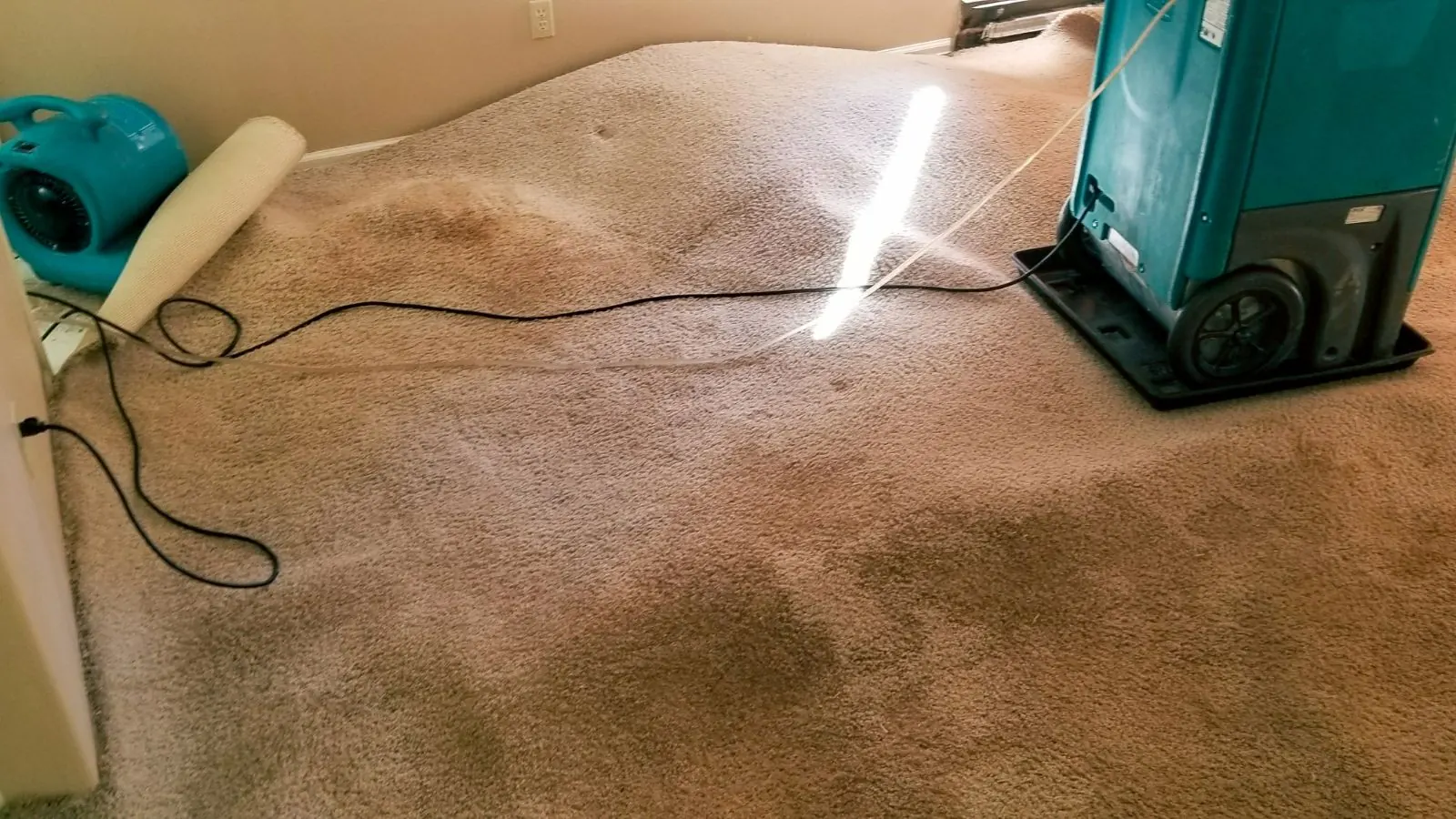
The crew pumps out standing water, removes wet carpet and pad, cuts wet drywall above the waterline and sets drying equipment. Concrete and block dry slowly, so dehumidifiers run for days. Drying continues until moisture readings reach normal.
| Basement feature | Likely action | Notes |
|---|---|---|
| Finished drywall | Cut out wet sections | Wicks water upward. |
| Carpet and pad | Remove pad, assess carpet | Contaminated water means removal. |
| Concrete floor and block walls | Dry with dehumidifiers | Hard surfaces take time. |
| Stored contents | Move and sort | Cardboard and fabric are often discarded. |
Options and honest trade-offs
Drying removes existing water. It does not stop new water. A sump pump, grading or drainage fix is a separate job for a contractor. If the water was contaminated by sewage or floodwater, more materials are removed.
A wet basement can lead to mold if left damp. The mold remediation page explains the standard that applies after growth appears.
What changes the cost
Basement jobs vary by depth and finish.
Depth and duration
Deeper water for longer wets more material.
Finished or unfinished
Finished spaces add drywall, carpet and trim.
Contamination
Floodwater and sewage change what can be saved.
Drying time
Concrete and block dry slowly.
Basement wet? Call and describe the water depth and whether the space is finished.
Sorting belongings after a basement flood
Start with what is dry and valuable, and move it upstairs. Paper, cardboard and fabric that sat in water are usually discarded, and photographs and documents can sometimes be dried by a specialist. Hard items like tools and plastic bins can be cleaned.
Keep a list with photographs of anything you throw away, because insurers often ask for an inventory. The state insurance guide recommends making a home inventory that lists possessions room by room.
What to do before going down the stairs
Do not enter a basement with standing water if the panel, a furnace or outlets sit in it. Shut off power at the main breaker only if you can reach it from a dry spot, and call the utility if you are unsure.
Once it is safe, move belongings upward and photograph the waterline. Do not run a household vacuum on standing water.
Insurance and basement water
Coverage depends on the source. The New Jersey Department of Banking and Insurance guide for homeowners states that homeowners policies exclude flood damage and lists sewer backup or sump pump overflow among common exclusions, with limited coverage available as an endorsement. Ask your agent what you carry.
Photograph the waterline and keep receipts.
Frequently asked questions
Yes. The line is open 24/7. Storms often cause basement flooding at night.
Not if water is deep or near outlets. Wait for the water to be pumped and power confirmed safe.
A sump pump removes water that collects. It does not dry the structure after a flood.
It depends on the water and materials. Concrete and block take the longest.