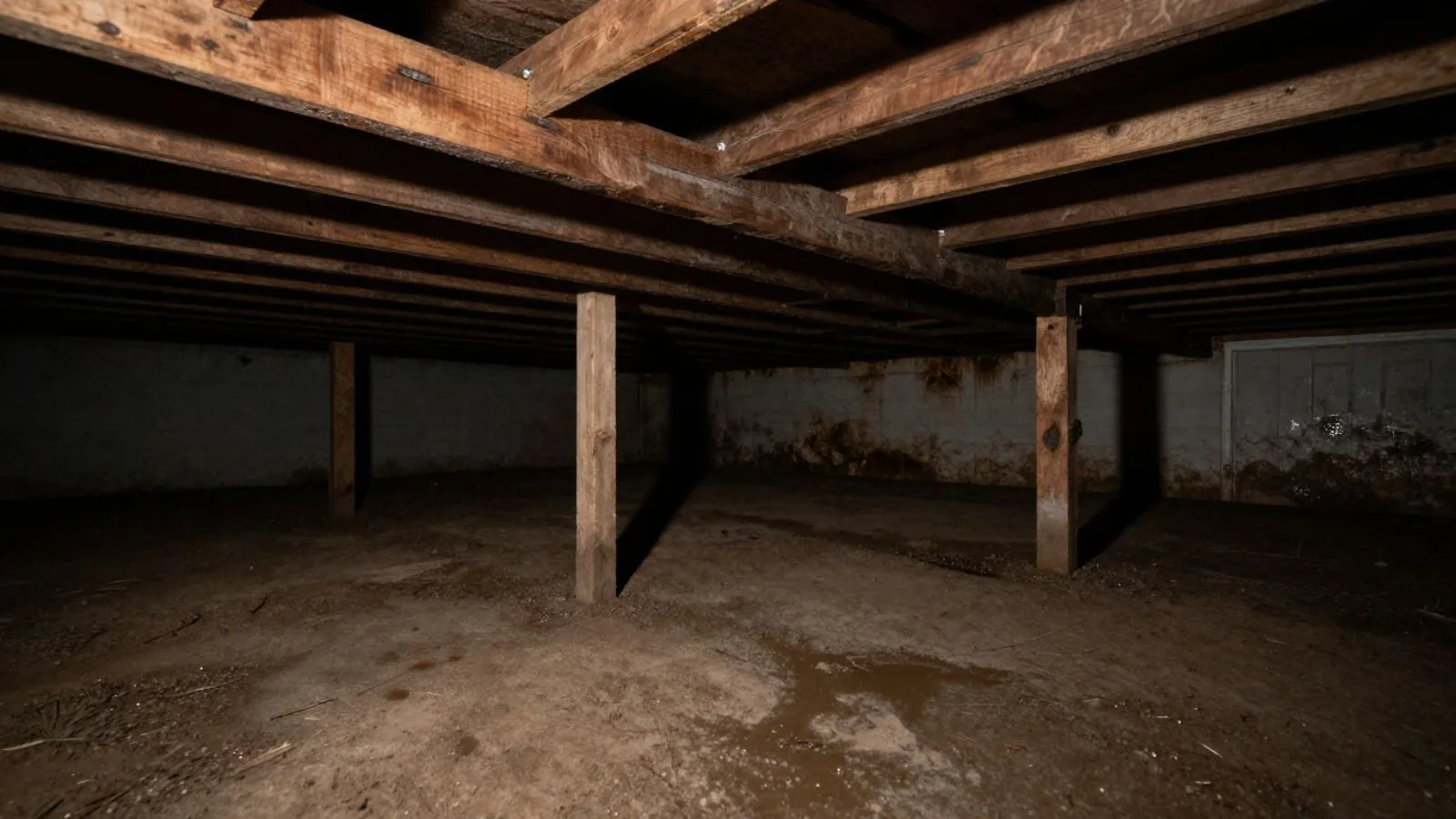
Crawl space water damage is the wet damage that develops when groundwater, a plumbing leak or high humidity leaves a crawl space wet. In West Milford, many homes sit on sloped lots near streams and lakes, so a crawl space can take on water after heavy rain. Dispatch is open 24/7 when water is deep or still arriving.
If water is standing in a crawl space, turn off power to that area at the panel only if the panel is dry and you do not have to enter the water. Do not go into a crawl space with standing water and plugged-in equipment. Call for help and describe how deep the water is.
The crawl space is out of sight, so damage often goes unnoticed until floors feel soft or a smell reaches the living space.
Moisture under a house can lead to damp floors above, so the hardwood floor water damage page may also apply. Dispatch covers Ringwood and nearby towns.
How water gets into a crawl space here
The township's groundwater study states that about 84 percent of the township has slopes that favor surface runoff, and that normal annual precipitation is 51.4 inches. Runoff that reaches the foundation can enter through vents, wall cracks or the soil floor. Rising groundwater after long rains is another path.
Plumbing leaks are the other common cause. A supply line or drain that fails in a crawl space can run unseen for weeks. If the water is deep, water extraction comes first, and drying follows.
Signs of a wet crawl space
Look for standing water, damp or sagging insulation, a musty smell, condensation on pipes or ducts, and rusted fasteners. In the living space, signs include cold or soft floors, warped hardwood and doors that stick.
A moisture reading in the floor joists tells you whether the wood is wet. Photographs from the crawl space help show what the crew will find.
How crawl space water is removed and dried
The crew extracts standing water, removes wet insulation, and dries the joists and subfloor with air movers and dehumidifiers. Some crawl spaces need a vapor barrier or a drainage fix after drying, which is a separate repair.
| Condition | Typical action | Notes |
|---|---|---|
| Standing water | Pump out, then dry | Check for a continuing source. |
| Wet insulation | Remove and replace | Wet insulation holds moisture against wood. |
| Damp joists and subfloor | Dry with air movers and dehumidifiers | Readings decide when to stop. |
| Dirt floor with no barrier | Discuss a vapor barrier | Reduces moisture rising from the soil. |
Options and honest trade-offs
Drying fixes the water that is already there. It does not stop water from coming back. If the source is runoff or groundwater, a drainage or grading fix is a separate job for a contractor.
Encapsulating a crawl space costs more than drying alone, but it can reduce humidity afterward. Ask for the reasoning behind any recommendation. If wood is wet for a long period, the mold remediation page explains the standard that applies to growth.
What changes the cost
Scope varies, so no flat price fits.
Water depth and duration
Deeper, longer water means more wet material.
Access
Tight crawl spaces slow the work.
Insulation and materials
Insulation removal and replacement are part of the scope.
Drying time
Equipment stays until the framing reaches dry readings.
Wet crawl space? Call and describe the water depth and what you can see.
What you can check from the hatch
Look from the access hatch with a flashlight and stay out if water is standing or the space has no safe footing. Note where the water is, whether the insulation hangs down, and whether any pipe is dripping. Do not crawl in if you smell gas or see wiring in water.
Photographs from the hatch help the crew prepare equipment. A moisture reading in the joists above the space tells whether the wood has been wet long enough to be a concern, which affects the drying plan.
Insurance and crawl space water
Coverage depends on the source. A sudden pipe failure is treated differently from groundwater, and flood damage usually needs a separate policy. The New Jersey Department of Banking and Insurance guide states that homeowners policies exclude flood damage. Flood coverage is available through the National Flood Insurance Program. Ask your insurer how your policy applies.
Take photographs and keep receipts for cleanup.
Frequently asked questions
Standing water or an active leak is. Dispatch is open 24/7 if water is deep or still arriving.
No. Drying removes existing moisture. A drainage or grading fix addresses the source.
Usually no. Wet insulation holds moisture against wood and should be replaced.
We can explain options and coordinate. A contractor handles any drainage or grading work.