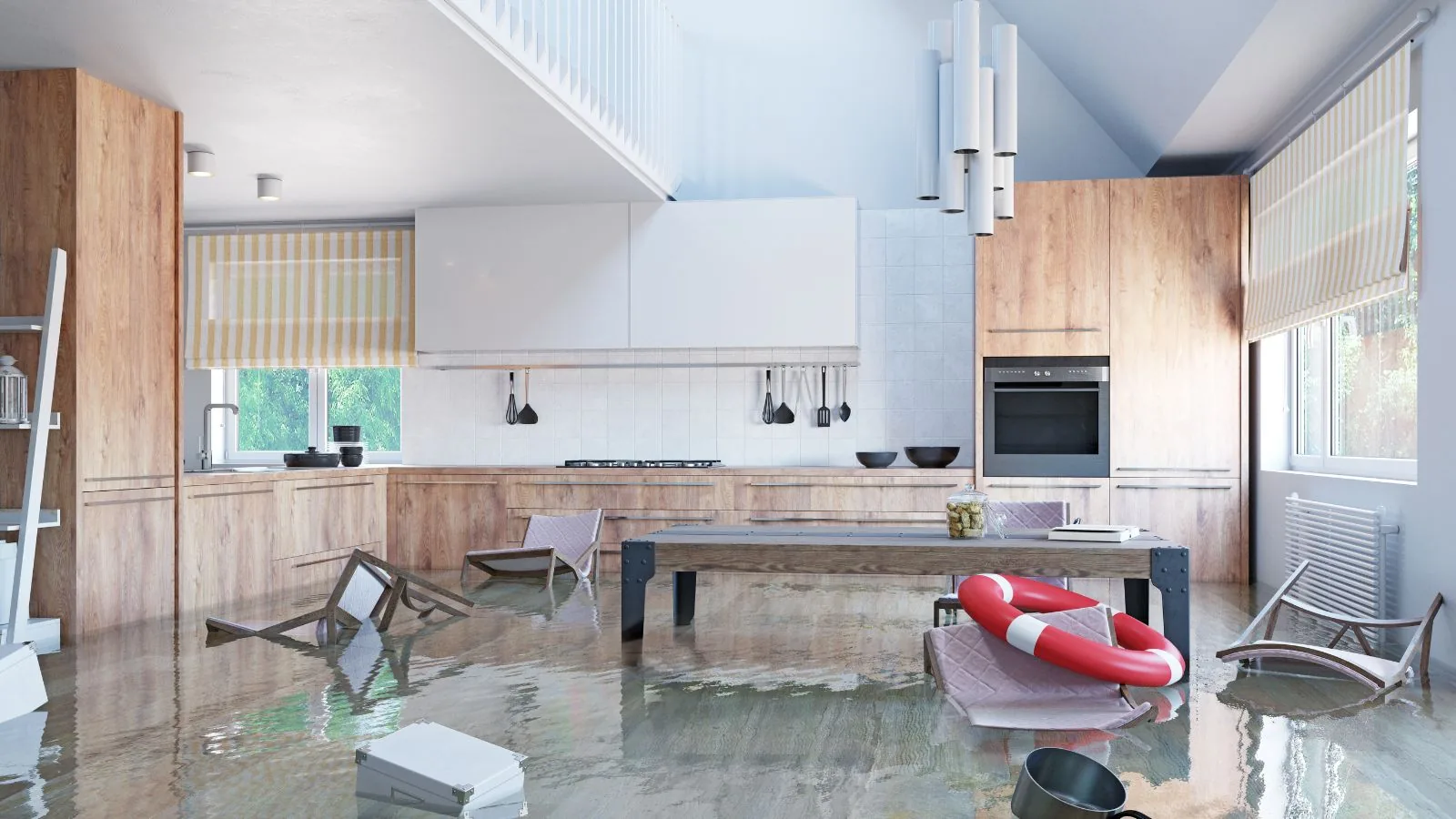
Kitchen water damage restoration is the drying and repair of cabinets, flooring, subfloor and walls after a leak from a sink, dishwasher, refrigerator line or supply pipe. In West Milford a kitchen leak often goes unseen until a cabinet base swells or the floor softens. Dispatch is open 24/7 if water is spreading.
Close the shut-off valve under the sink or the main valve, empty the cabinet and wipe up standing water. Keep the dishwasher off and unplug small appliances near the wet area. Photograph the damage before anything is moved.
Kitchens have many materials in a small space. That is why drying them takes planning.
Where kitchen leaks hide
The sink base cabinet is the most common leak spot, thanks to supply lines, drains and disposals. Dishwasher leaks run behind the toe kick and into the subfloor. Refrigerator ice maker lines leak behind the unit and under it.
Cabinets made of particleboard swell when wet and do not recover. Solid wood and plywood cabinets often dry better. If an appliance caused the leak, the appliance leak water damage page covers that cause.
Signs of kitchen water damage
Swollen cabinet bottoms, peeling laminate, a soft spot in the floor, a musty smell and warped flooring at the edge of a cabinet are common. A dishwasher that has leaked often leaves a stain on the floor around it.
A moisture meter finds wetness behind the toe kick and under flooring. Thermal imaging shows wet areas behind cabinets without removing them.
How kitchen drying and repair work
The crew extracts water, removes baseboard and toe kicks to open the cavity and sets drying equipment. Flooring is checked and, if wet, lifted so the subfloor can dry. Cabinets are dried in place where possible, or removed and replaced when swollen.
| Kitchen part | Common outcome | Notes |
|---|---|---|
| Particleboard cabinets | Often replaced | Swell and lose strength when wet. |
| Plywood or solid wood cabinets | Often dried | Better tolerance for moisture. |
| Vinyl or tile flooring | Lifted if water is trapped | Subfloor must dry. |
| Hardwood flooring | Dried or replaced | Depends on how long it was wet. |
Repair options and honest trade-offs
Drying in place is cheaper than a remodel, but it only works when materials are still sound. Replacing cabinets and flooring costs more and removes the hidden moisture. A kitchen remodel is a separate project from water damage restoration.
For hardwood, see hardwood floor water damage repair. For wet drywall behind a cabinet, wall and drywall water damage repair covers when it has to be cut out.
What changes the cost
Kitchen costs depend on what got wet.
Cabinet material
Particleboard is replaced more often than plywood.
Flooring
Hardwood and tile behave differently when wet.
How long it leaked
Longer leaks wet more of the structure.
Drying time
Equipment stays until readings reach dry standards.
Kitchen leak? Call and describe the cabinet and flooring.
Planning the repair around the cabinets
Cabinets are the most expensive part of a kitchen, so the decision about them drives the budget. Ask the crew to show moisture readings in the cabinet boxes and the subfloor. A cabinet with a sound box and a wet toe kick can often be dried and have its base repaired.
Ask for the scope in writing and keep it separate from any remodeling plans. If you plan to renovate anyway, tell the crew before drying, because that can change what is worth saving.
Dishwasher alcoves, sink bases and what hides behind the toe kick
The most overlooked wet spots in a kitchen are the cavity under the dishwasher and the space behind the toe kick. Water from a failed supply hose or a leaking drain collects there, and the cabinet base and subfloor can stay damp for days while the room looks normal.
Removing the toe kick panel and checking with a moisture meter takes minutes. If readings are high, the crew opens the cavity, sets airflow and dries it before any cabinet is replaced. That order matters, because installing new cabinet bases over wet subfloor starts the next problem.
What to do before the kitchen is dried
Turn off the supply valve under the sink or at the appliance, and unplug nearby appliances only if the cord and outlet are dry. Empty the lowest cabinet and lift contents onto a dry counter.
Do not run the dishwasher or the disposal until the source is fixed. Leave cabinet bases and toe kicks in place so the crew can read moisture.
Insurance and kitchen leaks
Sudden leaks from a supply line or appliance are often covered, while slow seepage and wear are often not. Check your policy. The New Jersey Department of Banking and Insurance guide for homeowners advises prompt reporting and keeping receipts and notes.
Save any failed parts and photograph the area.
Frequently asked questions
Plywood and solid wood often can. Particleboard that has swollen usually cannot.
Sometimes. The crew checks readings first and removes only what is needed.
It depends on materials and readings. Equipment stays until the structure is dry.
If water is spreading, yes. Call the 24/7 line.