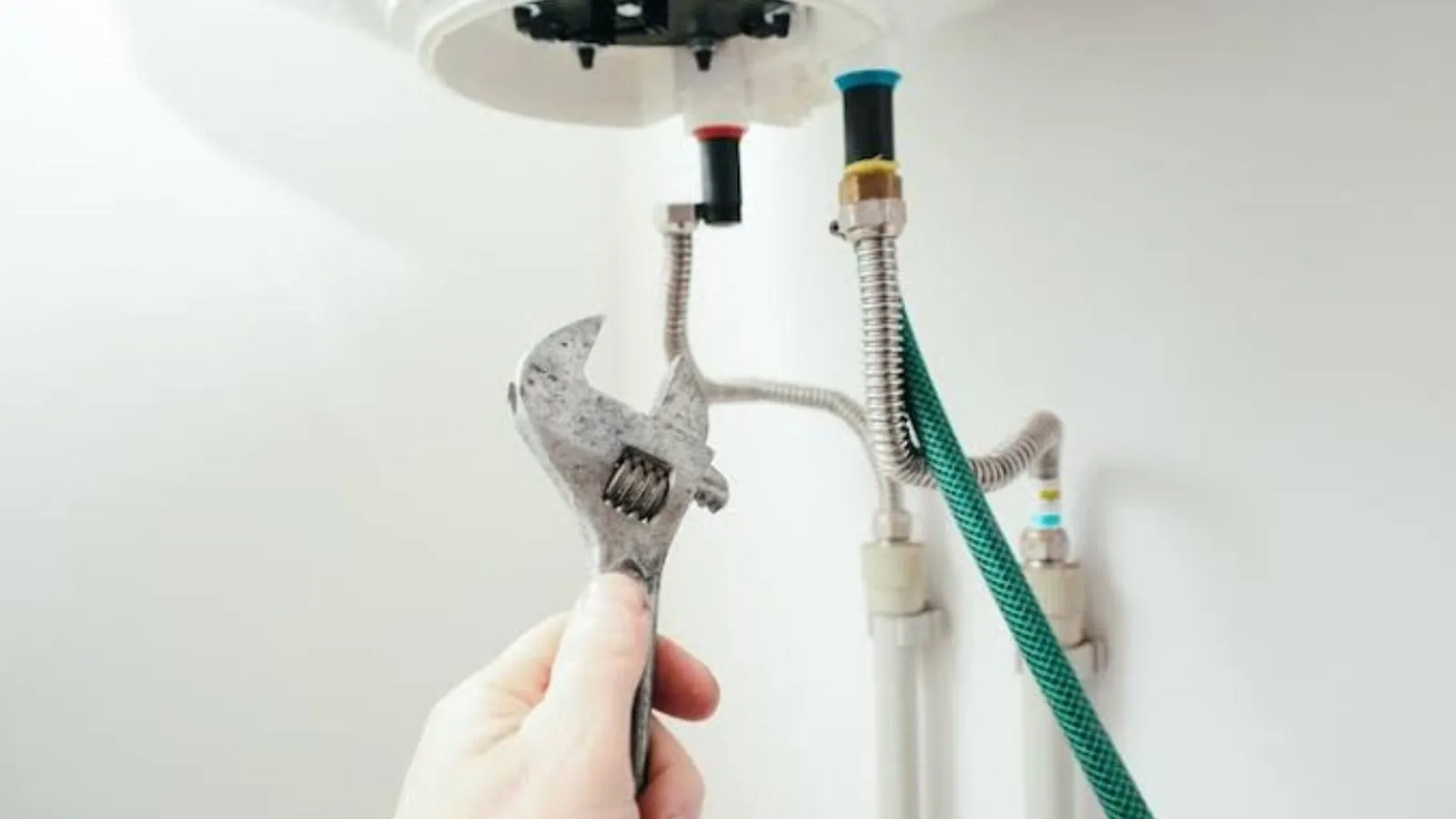
Water heater leak cleanup is the removal of the water a tank or its connections released, followed by drying the floor, walls and anything stored nearby. A leaking or failed water heater in West Milford is an emergency, because a full tank can empty onto the floor and keep refilling from the supply line. Our dispatch line is open 24/7 for these calls.
While you wait for a crew, close the cold water supply valve on top of the heater. For an electric unit, turn off the breaker if you can reach the panel on dry ground. For a gas unit, set the control to pilot or off, and call the gas utility from outside if you smell gas. Keep people out of standing water that touches the heater, wiring or the panel.
Most heaters sit in a basement or utility closet, where a leak spreads under walls and into finished rooms before anyone notices.
If the tank flooded a finished area, the basement water damage cleanup page explains the next steps. The line also covers Ringwood and nearby towns.
Water heater emergency: tank failure versus a small drip
A small drip at a fitting is a plumbing repair. A tank that is leaking from the bottom or the seam has failed, and it will not stop. A pressure-relief valve that discharges is a safety signal, and a plumber should look at it.
If the leak is a steady stream or the floor around the tank is already wet, treat it as an emergency, shut off the supply and call. Photograph the label and the leak location before the unit is removed.
Where the water goes in West Milford homes
Many water heaters are in basements, crawl spaces or utility rooms with concrete or plywood floors. Water follows the slope of the floor to the lowest point and into drains, sump pits and the base of walls. If your home has a finished basement, the water reaches carpet, drywall and cabinets within minutes.
The township's groundwater study counts 2,449 domestic wells, so many homes also have a well pump and pressure tank beside the heater. Water from a heater is clean supply water at first, which helps. The more time it sits, the more the situation changes, so the next step is water extraction and then drying.
How cleanup and drying are done
The crew pumps or vacuums the water, checks moisture in the floor and the base of walls, and removes anything that cannot be dried. Cabinets, insulation and drywall that have wicked water are cut at a safe height. Drying equipment then runs until readings are normal.
| What got wet | Likely action | Notes |
|---|---|---|
| Concrete floor | Extract and dry | Hard surface dries well with air movement. |
| Finished carpet | Extract, remove pad | Carpet may be saved if the water was clean and removal was fast. |
| Drywall base | Cut out wet section | Wicks water several inches above the line. |
| Stored boxes and contents | Move and dry or discard | Cardboard holds water and breaks down quickly. |
Repair, replacement and honest trade-offs
Replacing the heater is a plumber's job, and the tank usually has to be replaced rather than repaired. Many tank heaters are replaced after about a decade, but the age on the label tells you more than any rule of thumb.
Restoration work can start before the new heater is installed. Drying in place is cheaper than rebuilding, but only works when materials are still sound. A longer leak may also reach the next rooms, and the basement water damage cleanup page covers finished lower levels.
What changes the cost of cleanup
The cost depends on the size of the leak and what it touched.
How long it leaked
A small leak found quickly is a small job. A leak found after a weekend is not.
Finished versus unfinished space
A bare concrete floor dries quickly. A finished basement adds drywall, carpet and trim.
Contents
Stored items that must be moved, dried or discarded affect time on site.
Drying days
Equipment stays until readings reach dry standards.
Heater leaking now? Tell the dispatcher which room it is in.
Insurance and a water heater leak
A sudden tank failure is the kind of loss many homeowners policies address, while slow leaks from corrosion or wear are often treated differently. The New Jersey Department of Banking and Insurance guide for homeowners advises reporting the loss promptly, saving receipts and making temporary repairs to protect the property. Check your own policy, because the heater itself is often not covered even when the water damage is.
Keep the failed unit until your insurer says it can be discarded.
Frequently asked questions
Yes. The 24/7 line takes these calls. A tank that fails at night is common, and the response is the same as a daytime call.
If the supply is closed and the tank is leaking, a plumber can drain it safely. Hot water can scald, so do not touch the discharge pipe or the water around it.
Wet materials left damp for days can grow mold, which is why drying starts quickly. Fast extraction and drying reduce that risk.
No. A plumber replaces the heater. We handle the water cleanup and drying, and we can coordinate timing with the plumber.