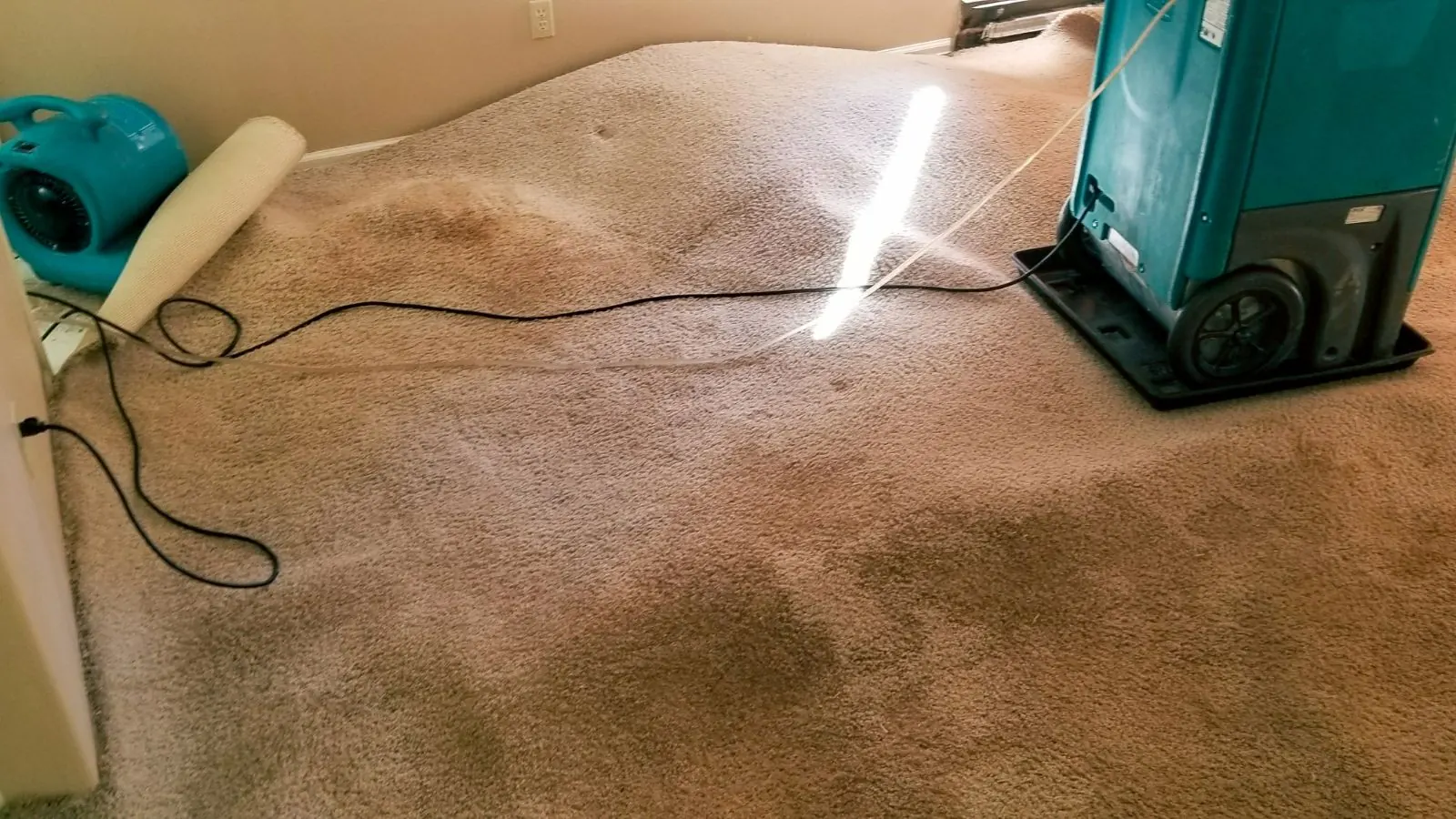
The commonly cited window is 24 to 48 hours. Federal guidance on cleaning up after a flood, such as the EPA mold guidance for homes, advises drying wet materials within that window to prevent growth. That does not mean a house is covered in mold after two days. It means the clock starts quickly, and the longer materials stay wet, the more likely growth becomes.
This guide explains the timeline in plain terms, what makes it faster or slower and what to do in the first two days after water damage. It makes no health claims.
What the 24 to 48 hour window means
Mold spores are everywhere, indoors and out. They need moisture and a food source, and drywall paper, wood, insulation and dust all qualify. When materials are wet for a day or two, spores that were dormant can start to grow.
Visible growth often takes longer, commonly several days to a couple of weeks, because it starts as tiny colonies. The early stage is invisible, which is why a house can look fine and smell musty.
What speeds growth up
Warm, humid air, materials that stay wet and stagnant airflow all speed things up. Porous materials such as drywall, ceiling tile, carpet pad and insulation hold water longest. Dark, closed spaces, such as wall cavities and under flooring, hold it longer still.
Contaminated water adds nutrients. Flood water and sewage carry organic material, so affected porous materials are usually removed, not just dried. The sewage backup cleanup page explains why.
| Material | Dry-out difficulty | Typical outcome |
|---|---|---|
| Hardwood and tile | Lower | Often dried in place. |
| Drywall and plaster | Moderate | Dried or cut out if soaked. |
| Carpet pad and insulation | High | Often removed. |
| Wall cavities | High | Opened and dried. |
What slows it down
Fast water removal, airflow and dehumidification all slow growth. Removing standing water, opening the space and running air movers and a dehumidifier make the biggest difference in the first two days.
Measured drying matters. A wall can feel dry on the surface and hold moisture inside. The structural drying page explains how readings confirm the structure has reached dry standards.
Water damage in your house right now? Call the 24/7 line and describe it.
What to do in the first 48 hours
Stop the source and remove standing water. Pull up wet rugs and lift furniture off wet floors. Open windows if the outside air is drier, and run fans and a dehumidifier.
Remove materials that cannot be saved, such as soaked carpet pad and wet insulation, and keep them for your insurer to see if needed. If you cannot dry things within about two days, call for help early.
- Hour 0 to 4: stop the source, remove standing water.
- Hour 4 to 24: open the space, start fans and a dehumidifier.
- Hour 24 to 48: check for hidden wet spots and remove ruined porous material.
- After 48 hours: expect to see or smell growth if wet areas remain.
Signs that growth has started
A musty smell, fuzzy or speckled patches, new stains and bubbling paint are common signs. Check behind baseboards and under sinks, where moisture lingers. If you see growth, the question becomes how much and on what.
Small areas on hard surfaces can often be cleaned. Larger areas, or growth in porous materials, need a plan. The mold remediation page describes containment and removal.
Humidity after the water is gone
Even when the standing water is out, high indoor humidity can keep materials damp. A dehumidifier and steady airflow bring the air down, and readings on walls and floors confirm the structure is following.
Watch for condensation on windows and a clammy feel in the room. Both suggest the air still holds too much moisture.
Why porous materials matter most
Dry, hard surfaces such as glass and tile rarely support growth on their own, but dust and soap film on them can. Porous materials hold water inside, and that is where the timeline gets short.
When you walk through a wet room, note which materials are porous and prioritize them. Pad, insulation and the paper face of drywall deserve attention first.
If it has already been more than two days
It is not too late to dry. Drying later still prevents more growth, even if some has started. Have the area assessed, remove what is ruined and dry what remains.
Do not wait for visible growth before acting. Moisture readings find wet materials that still look normal.
West Milford note: the Irene lesson
The Pequannock River gauge at the Macopin Intake Dam crested at 7.42 feet on August 28, 2011 during Hurricane Irene, against a flood stage of 5.5 feet, according to the National Weather Service. Homes that took water then faced exactly this clock.
Whether water comes from a river, a lake backing up or a failed pipe, the timeline is the same. Homeowners in Bloomingdale and Wanaque who had flooding learned that early drying mattered more than anything else.
Not sure what you are looking at? Call and describe it. We explain the likely scope.
Frequently asked questions
Growth can start within 24 to 48 hours in wet porous materials, though it often takes several days to become visible.
High humidity can still support growth. A dehumidifier and airflow help keep the structure dry after the water is removed.
Assume hidden moisture and have the area checked. Drying later still helps, and moisture readings can find what you cannot see.
As fast as possible, ideally within 48 hours. The 2011 flood showed how quickly river water reaches homes and how long damp materials linger.