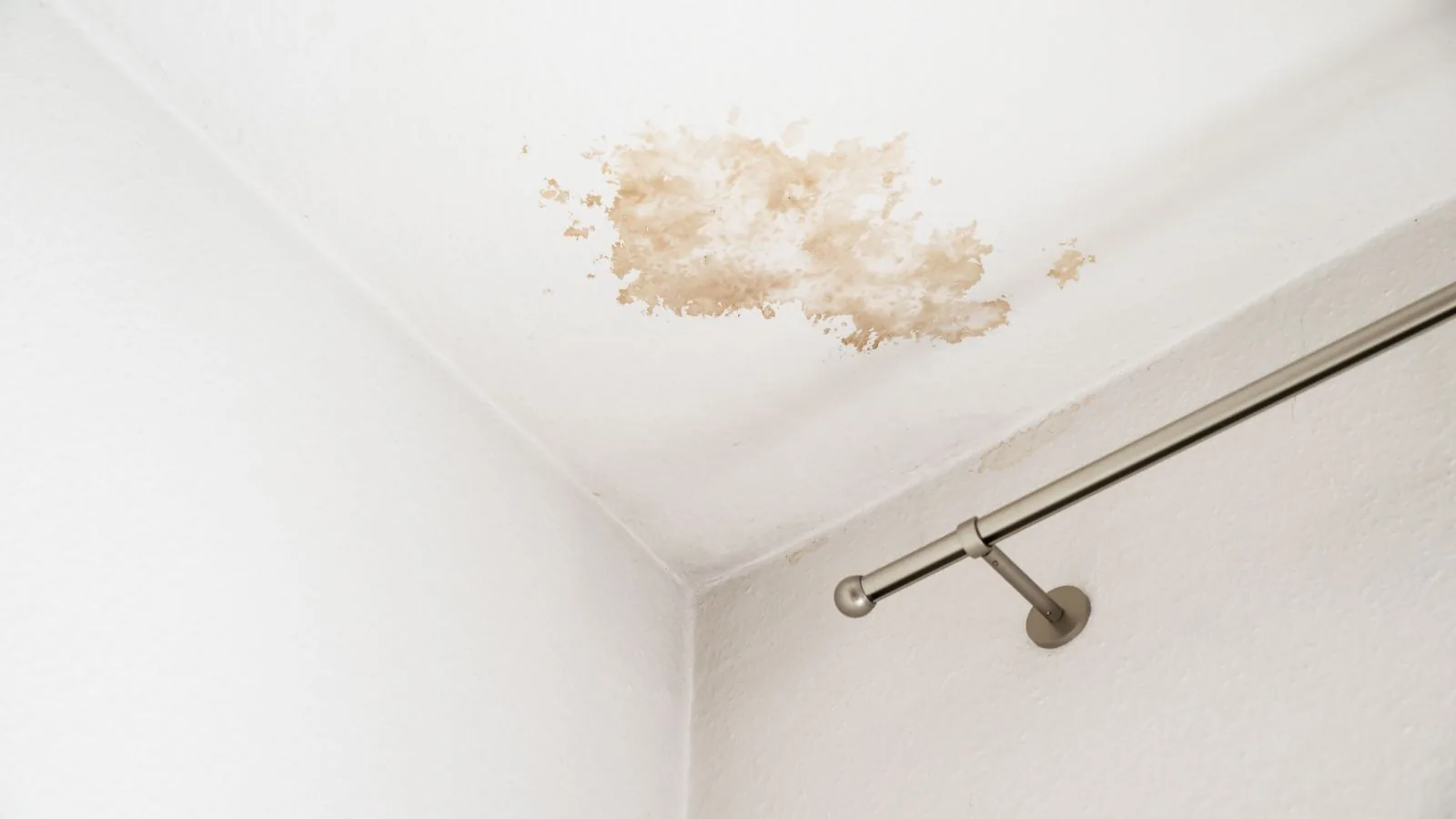
A brown stain on a ceiling raises two questions: is it still active, and how long has it been there? The answers matter for repairs, for insurance and for anyone buying or selling a house.
No single sign is certain. Several together give a good picture. This guide covers what to look for and the limits of each clue. A professional with a moisture meter can confirm what your eyes cannot.
The ANSI/IICRC S500 standard for water damage restoration describes how moisture is measured, which is the same method used to date and confirm a leak.
Check for moisture first
The best test for active damage is whether the material is wet right now. A moisture meter reads wood and drywall without cutting. A wet reading means the leak is active or the material has not dried.
A dry reading on an old stain suggests the leak stopped, though not that the problem is solved. Dry stains can come back to life when the source returns.
Look at the stain
Fresh damage tends to be damp, with soft edges and a lighter color. Old stains are often darker, with defined rings from repeated wetting. Multiple rings suggest multiple wet and dry cycles.
Color helps but does not settle it. Tannins from wood and chemicals in materials change color over time.
| Sign | Suggests new or active | Suggests old or past |
|---|---|---|
| Moisture reading | High | Normal. |
| Stain edges | Soft and spreading | Defined rings. |
| Texture | Soft, swollen | Brittle or crusty. |
| Smell | Fresh dampness | Stale, musty. |
| Paint | Bubbling, wet | Peeled, flaking. |
Feel and smell
New water damage feels soft, spongy or swollen. Old damage can feel brittle, crumbly or chalky. A fresh leak smells damp. A long-term one smells musty and stale.
Press gently on drywall near a stain. If it gives easily, the material is wet or has been wet for some time. Wood that is soft or crumbles is rotted, which takes long exposure.
Water damage in your house right now? Call the 24/7 line and describe it.
Look at the surroundings
Rust on nails and fasteners, warped flooring, cracked caulk and mineral deposits all point to long-term moisture. Efflorescence, a white powdery crust on masonry, means water has been moving through the wall repeatedly.
Check above and beside the stain too. The visible stain often sits away from the source, because water travels along framing and pipes.
Why it matters
For insurance, sudden damage and gradual damage are treated differently, and dating a loss helps. For a sale, buyers and inspectors ask about past leaks. For repairs, active moisture must be stopped before anything is rebuilt.
Take dated photographs now. They create a record you can compare against later.
Photographs and a simple log
Take a photo of the stain next to a ruler or a coin, note the date and repeat every week. If the stain grows or darkens, the source is active. If it stays the same size and dry, it may be old.
A log also helps a professional, because it shows how the damage changed while you watched.
Common causes of repeat stains
Ceiling stains often return because of a roof flashing problem, a condensing duct or a bathroom above. Wall stains return when a pipe fitting weeps slowly or when exterior grading sends water to the foundation.
Fixing the stain without fixing the cause only resets the clock. Trace the source before painting.
What buyers and inspectors look for
Inspectors check stains, test moisture and look for patched areas. Fresh paint on one patch of ceiling is a clue that something happened there.
If you are selling, keep records of the cause and the repair. Clear documentation answers questions before they become negotiating points.
Using the water bill and the weather
Match the date a stain appeared with rain, a freeze or a plumbing repair. A stain that showed up after the first heavy rain of the season points to the roof or the foundation, and one that appeared after a cold snap points to a pipe.
A rise in your water bill around the same time points to a leak in the plumbing, not the weather.
When to call a professional
If you find an active leak, hidden moisture or a large stained area, a professional assessment saves time. Measured readings across the area tell you what is wet and what is dry.
The structural drying page explains how moisture is mapped, and the ceiling water damage repair page covers sagging or stained ceilings.
West Milford note: a range of elevations and exposures
The township's groundwater study describes ground elevations from under 320 feet along the Wanaque River to more than 1,400 feet near Bearfort Mountain. Exposure to wind, rain and cold varies a lot across that range, so roof and siding leaks can show up differently from one neighborhood to the next.
If you are buying near Wanaque or Ringwood, ask about past leaks and request maintenance records. A stain with no explanation is worth a moisture reading.
Not sure what you are looking at? Call and describe it. We explain the likely scope.
Frequently asked questions
Not always. Rings form each time a stain dries, so they show repeated wetting. The material may still be wet now.
Yes. Paint can hide a stain but not moisture. A meter finds wet materials behind fresh paint.
Take a moisture reading and recheck after a few days. Rising or steady readings mean the source is active.
Disclosure rules vary. Ask your agent or attorney what applies to your sale.