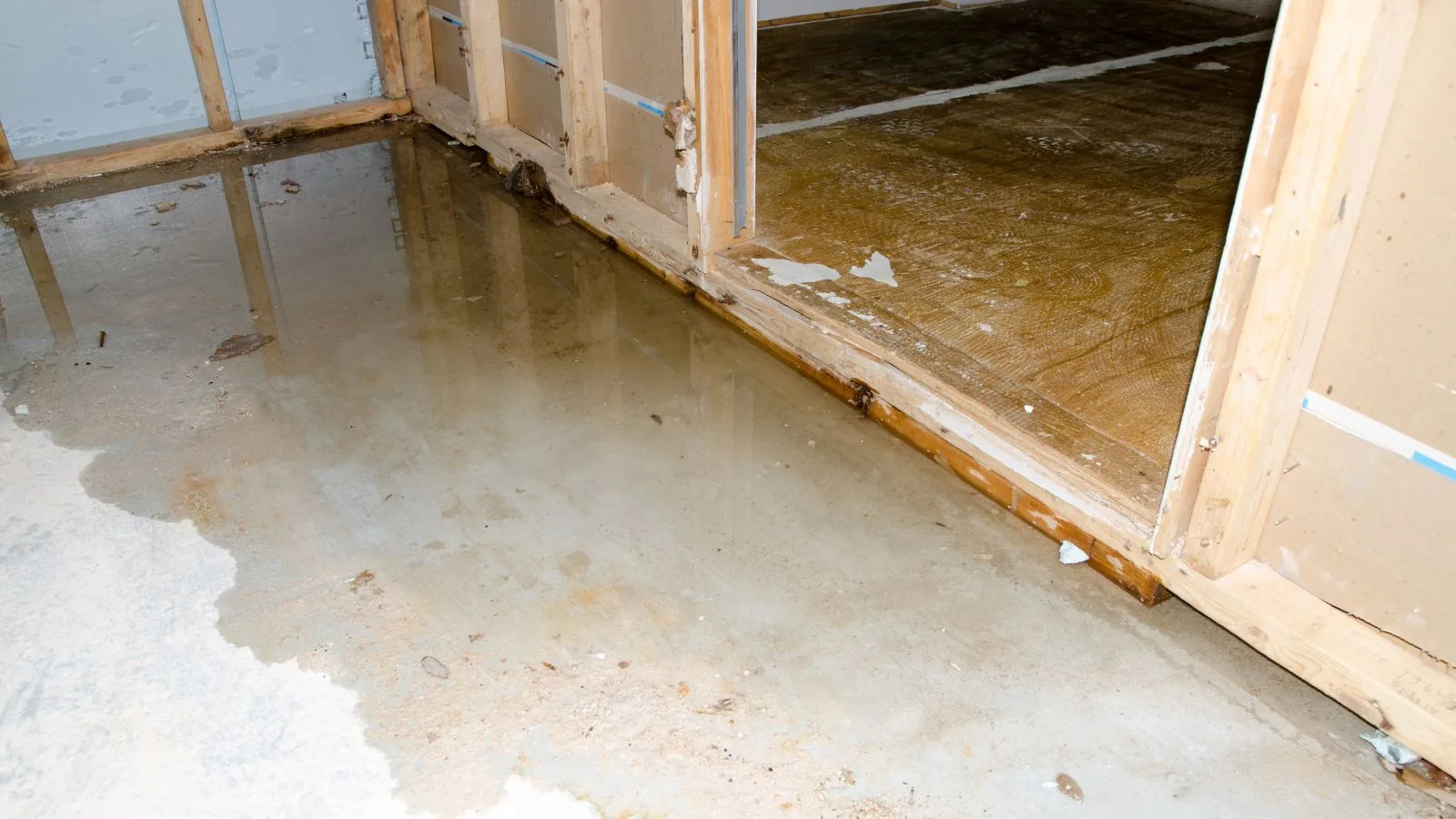
Restoration professionals sort water into three categories. The ANSI/IICRC S500 standard for water damage restoration defines them, and any company you hire should be able to explain which category your water falls into and why.
The category is not about how much water there is. It is about what the water carries. A small amount of Category 3 water is a bigger problem than a large amount of Category 1. This guide explains each, how water changes category over time and what homeowners should do.
Category 1: clean water
Category 1 water comes from a sanitary source, such as a broken supply line, a leaking faucet or a tub overflow with no contamination. It does not pose a substantial risk when first released.
It does not stay clean forever. Left standing, it can pick up contaminants from the materials it touches and change category. Fast removal keeps most Category 1 jobs simple and keeps more materials salvageable.
Category 2: gray water
Category 2 water carries a significant level of contamination and can cause discomfort if people come into contact with it. Common sources include dishwasher and washing machine overflow and some toilet overflows with urine but no feces.
Porous materials that absorb Category 2 water, such as carpet and pad, are often removed. Hard surfaces are cleaned and disinfected. The water extraction page describes the first steps.
Category 3: black water
Category 3 water is grossly contaminated and may carry pathogens. Sources include sewage backups, flood water from rivers and streams and water from outside that has been in contact with soil. Standing Category 1 or 2 water that sat too long can also become Category 3.
The term black refers to the contamination level and not the color. Porous materials are removed, the area is cleaned and sanitized and workers use protective equipment. The sewage backup cleanup page explains the work.
| Category | Common sources | Typical handling |
|---|---|---|
| 1 (clean) | Supply line, faucet, tub overflow | Extract and dry, most materials saved. |
| 2 (gray) | Appliance overflow, some toilet overflow | Remove porous materials, clean, dry. |
| 3 (black) | Sewage, river flood water, ground water | Remove porous materials, sanitize, dry. |
Water damage in your house right now? Call the 24/7 line and describe it.
How water changes category
Time and temperature change the category. Clean water that sits in warm conditions for a day or two can become gray, and gray can become black. The material it touches also matters, because water crossing a dirty floor picks up contaminants.
This is why speed is a safety issue as well as a cost issue. The longer water sits, the more has to be removed, and the less can be saved.
What homeowners should do
Stop the source and note where the water came from. If you are not sure, treat it as contaminated. Avoid contact, keep children and pets out and do not run a vacuum designed for dry use.
Tell the dispatcher the source when you call. It decides the equipment, the protective gear and whether materials such as carpet pad go straight to disposal.
Why standards use categories at all
The categories give crews and homeowners a shared language. A scope that says Category 3 tells you protective gear, disposal and sanitizing are part of the job, which explains a higher price than a clean-water job of the same size.
It also tells your insurer what the loss involved, because the source of the water often decides what the policy covers.
Questions to ask about your water
Ask the crew what category they believe it is, how they decided and what would change that opinion. A good answer mentions the source, the time the water sat and the materials it touched.
If the answer is vague, ask again. The category drives the plan, so you should understand it.
Why the category affects price and insurance
A Category 3 job involves more removal, protective equipment and disposal than a Category 1 job. That is why a flat price over the phone cannot be accurate. We explain the likely scope on the call and in writing before work starts.
Insurance policies treat sources differently too. Sewer backup and flood are often excluded unless you carry specific coverage. Ask your agent before you need to.
West Milford note: creeks, lakes and Category 3
The township has several streams that rise in heavy rain, including the Pequannock River, Long House Creek and West Brook, listed in its state-studied waters table. A local news report on the 2011 flooding noted that Belchers Creek rises when Greenwood Lake backs up.
Water that enters from a creek or a lake is outside water, which is treated as Category 3. Homes in Ringwood and Highland Lakes near lakes and streams should assume contamination until told otherwise.
Not sure what you are looking at? Call and describe it. We explain the likely scope.
Frequently asked questions
Usually Category 1 when the water is from a supply line. It can degrade if it sits, so remove it quickly.
Water from rivers, streams and ground contact is treated as Category 3 because of what it carries. Treat it as contaminated until the crew assesses it.
Hard, nonporous materials can often be cleaned and sanitized. Porous materials such as carpet, pad and drywall are usually removed.
The source decides the category, which decides equipment, protection and what gets removed. Tell them what you know.