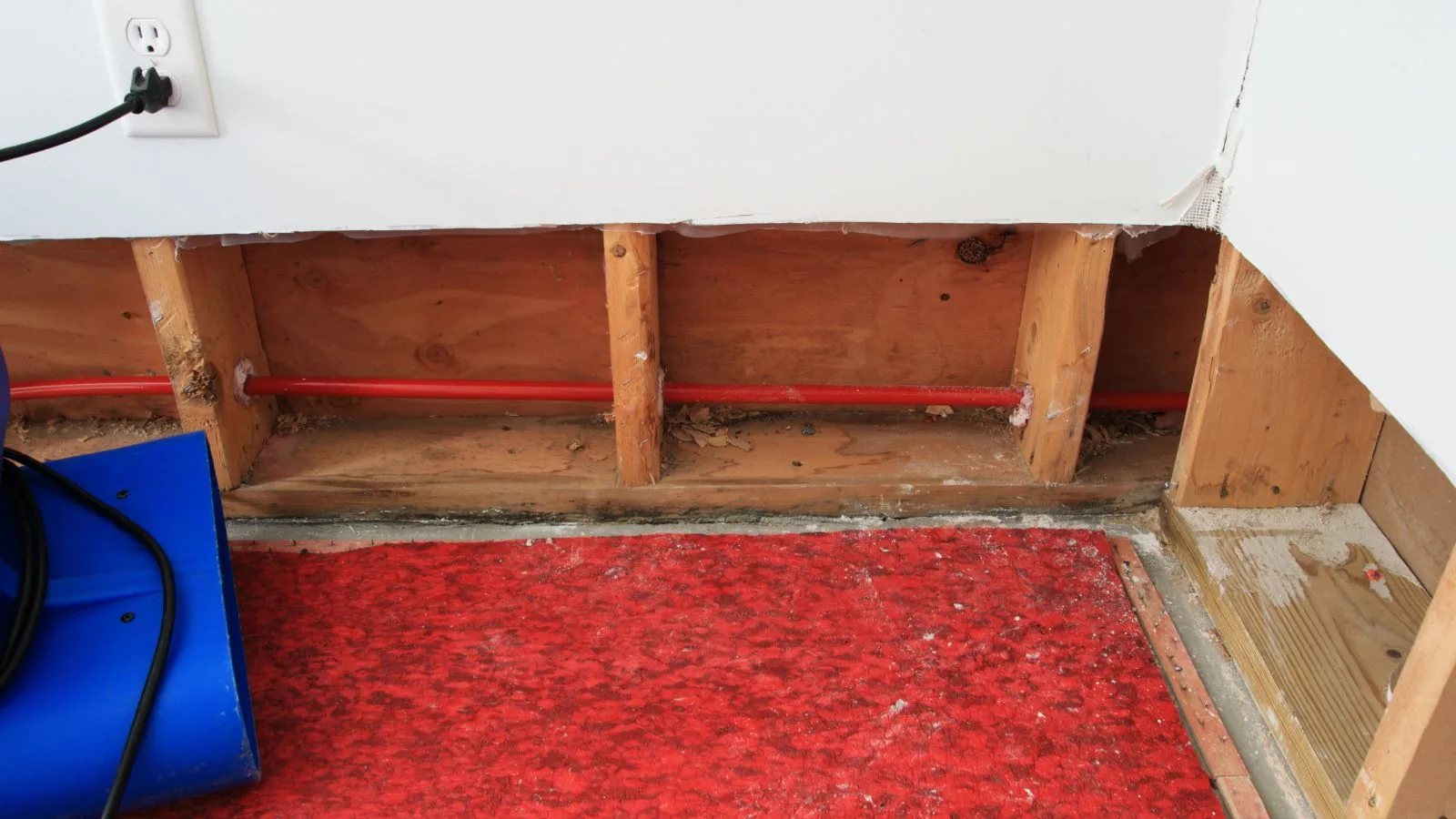
Not every wet spot needs a crew. A small spill on a hard floor, a damp towel pile or a minor sink drip can be handled with towels, a fan and a bit of time. The line between that and a professional job comes down to the amount of water, what it touched and how fast you can dry it.
This guide explains what you can reasonably do yourself, what to avoid and the signs that it is time to call. Safety comes first in every case.
The ANSI/IICRC S500 standard for water damage restoration is the published reference for what counts as dry, which is why readings matter more than touch.
Jobs most homeowners can handle
A small amount of clean water on a hard floor, such as tile or sealed vinyl, can be mopped and dried the same hour. A damp patch of carpet from a small spill can be blotted and fanned.
The key is that the water is clean, the amount is small and everything is dry within a day. If any of those fails, escalate.
Safety before cleanup
Do not enter standing water if any outlet, cord or appliance may be live. Turn off power to the area at the panel only if the panel is dry and you can reach it safely. Do not touch a wet electrical device.
Wear gloves and boots when handling contaminated water. Keep children and pets out of the area.
Signs you need a professional
Standing water, wet drywall or insulation, water in more than one room, contaminated water and any water that has been present for more than a day are all reasons to call. So are ceilings that sag and floors that buckle.
Wet building materials hold water inside. They look dry on the surface and keep releasing moisture for days. A crew with moisture meters finds and dries it.
| Situation | Homeowner or professional |
|---|---|
| Small clean spill on tile | Homeowner. |
| Damp carpet, caught within hours | Homeowner, with fans. |
| Standing water over an inch | Professional. |
| Wet drywall or insulation | Professional. |
| Sewage or flood water | Professional. |
| Sagging ceiling | Professional, stay clear. |
Water damage in your house right now? Call the 24/7 line and describe it.
Equipment: what you can borrow and what you cannot
Box fans and a household dehumidifier help with small jobs. Rental air movers and dehumidifiers are available, but running them without measuring is guesswork.
Professionals use moisture meters to know when the structure is dry, and thermal cameras to find hidden wet spots. The structural drying page explains the process.
What not to do
Do not use a household vacuum on wet floors. Do not leave wet carpet in place because the surface feels dry. Do not paint or seal over damp materials, and do not run heat on drywall that has been soaked.
Do not wait to see whether it dries. Waiting is how a small job becomes a large one.
Document the small jobs too
Even a minor spill deserves a quick note and a photo if it happened near an appliance or a pipe. If the spot returns, you will know when it started.
Small leaks are often the first sign of a failing hose or fitting, and the record helps a plumber.
Handing off to a professional
When you call, tell the dispatcher what you already did: how long the water sat, what you removed and whether fans are running. That saves time and avoids repeating steps.
Leave wet materials in place for the crew to see unless they are a hazard. Their condition is part of the record.
When to stop and call
If your own efforts have not dried the area in a day, stop and call. Fans can move moisture around without removing it, and humidity can climb.
It is not a failure to hand the job over. Calling early often keeps a small job small.
Preventing the next one
After a spill or leak, look at why it happened. A worn hose, a clogged drain pan or a pump that lost power are all fixable. Fix them before the next wet season.
A short list of repairs is cheaper than another cleanup.
A quick decision rule
Ask three questions. Is the water clean? Is the amount small? Can it all be dry within a day? If the answer to all three is yes, handle it yourself. If any answer is no, or you are unsure, call.
For standing water, water extraction is the first step, and the dispatcher can tell you over the phone whether the job is one you can handle.
West Milford note: outages and sump pumps
Local news reported that about 3,000 township residents lost power during Hurricane Irene in 2011. When power fails, sump pumps stop and basements fill, which is a case where a few inches of water becomes a job that is beyond a mop and a fan.
Homeowners in Wanaque and Bloomingdale who have lower levels should know where their breaker panel and sump are before the next storm.
Not sure what you are looking at? Call and describe it. We explain the likely scope.
Frequently asked questions
If it is clean water, small and caught within hours, yes, with fans. The pad often needs attention too. If it is larger or older, call.
For minor dampness, often. For wet drywall or insulation, readings are needed to know it is dry.
When any electrical device is near it, or when it came from sewage or outside flooding.
Yes. Describe it and we will tell you honestly if it is something you can handle.