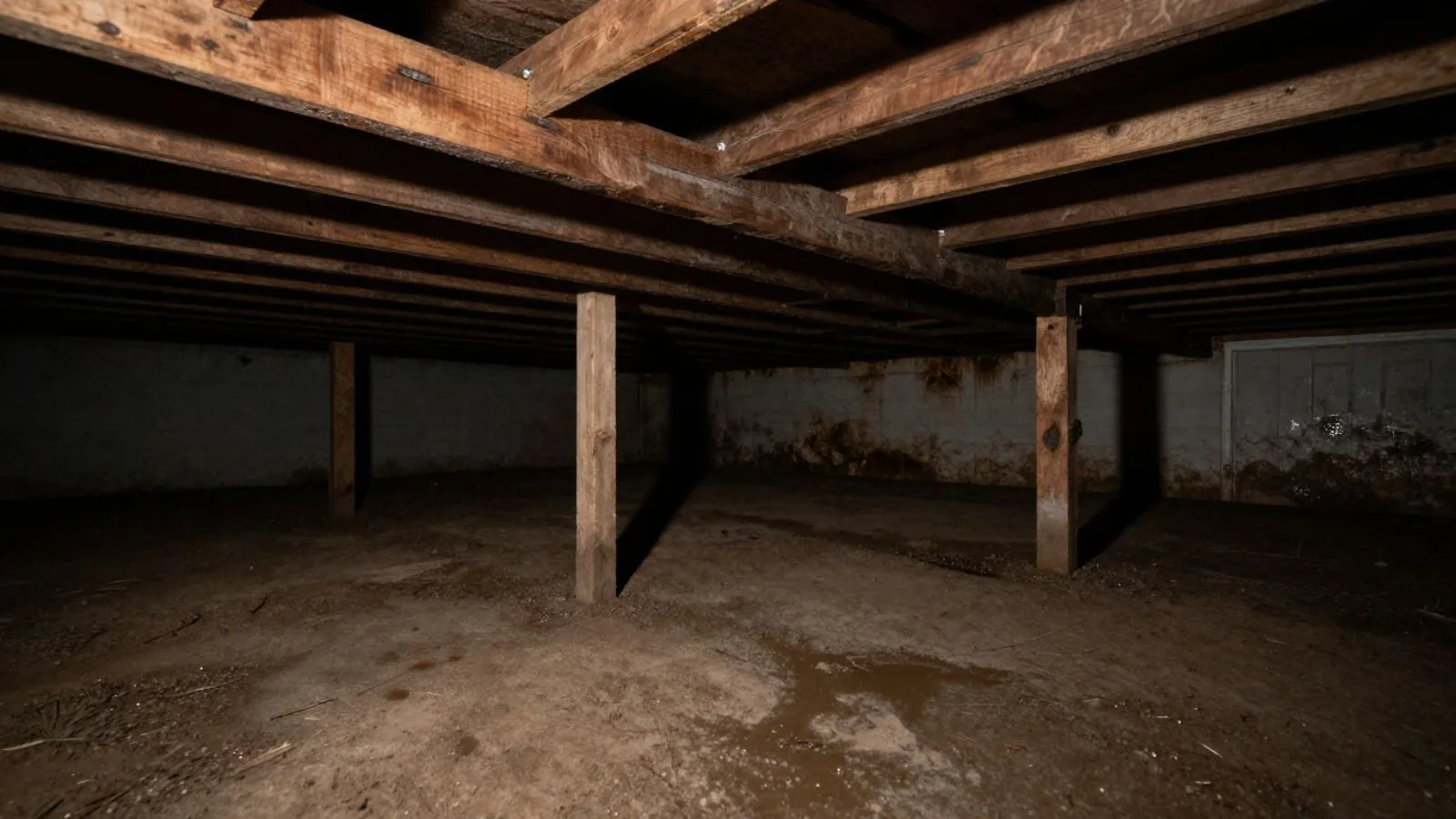
The most common description of mold odor is musty, earthy or like a damp basement. Some people compare it to wet leaves, old books or a towel left in a bag. The smell comes from gases that growth gives off while it feeds on damp material.
A smell tells you something is wet and probably growing. It does not tell you the color or type, and it does not tell you how much is there. This guide explains how to use the smell as a starting point without jumping to conclusions.
Describing the smell
The smell is strongest in closed spaces. Walk into a basement after the house has been shut for a few days and the odor stands out. It can be sharper after rain, when humidity rises, or when the heat first turns on.
Other things smell similar. A dry sump pit, a wet dog, an old mattress and a drain that has dried out can all produce a damp smell. If the odor is persistent and localized, moisture is the best explanation to investigate.
Black mold is a color, not a diagnosis
The term black mold is used for dark growth in general, and sometimes for one specific species. Color alone does not identify the species, and many dark patches are not dangerous or even mold. Only laboratory analysis can name a species.
For a homeowner, the useful question is not what kind it is but how much there is, how wet it is and what it is growing on. Those answers drive the plan whatever the label.
Where the smell comes from
Odor without visible growth often means the source is hidden, such as the back of drywall, under flooring or inside a wall cavity. Follow the smell to the strongest point and check for stains, soft spots and damp materials nearby.
Check recent history too. A past leak that was dried too slowly, or a flood that was only partly cleaned, often leaves a smell behind weeks later. The structural drying page explains why wet materials need measured drying.
A quick check
Is the smell stronger near a wall, floor or ceiling?
Has there been a leak, flood or heavy rain recently?
Do you see stains, bubbling paint or soft material?
Water damage in your house right now? Call the 24/7 line and describe it.
What not to do
Do not spray fragrance over it. Covering the smell hides the clue. Do not run a fan that blows through the damp area into the rest of the house, because it spreads spores. Do not cut into a large suspect area without a plan.
Do not assume that the lack of a smell means no growth. Some growth is odorless. Use your eyes and a moisture meter alongside your nose.
When to bring in help
A strong smell with no found source, a smell after a flood or sewage event or a smell that returns after cleaning all justify a professional look. The mold remediation page explains the work.
Ask whether your state licenses mold work, and ask any company whether its crews follow the ANSI/IICRC S520 standard. We do not make health claims, so if the smell is bothering anyone, speak with a doctor too.
Odor after a flood or sewage event
A sharper, sour or sewer-like smell points to a different problem than a plain musty one. Contaminated water leaves odors that come from decaying organic material, and those do not fade by airing out the room.
That situation calls for removal of affected porous materials and proper cleaning, not fragrance. The sewage backup cleanup page explains the steps.
Tracking the smell room by room
Close doors and walk the house from the lowest level up. Note where the smell is strongest, then check that spot with a flashlight and, if you have one, a moisture meter.
A written note of the day, the weather and what was running, such as the furnace or a dehumidifier, helps a professional narrow the cause quickly.
A smell that comes and goes
Odors that appear on humid days and fade in dry weather usually point to a damp surface that dries out in between. Mark the days it happens and compare them with the weather, since that pattern narrows the search to materials that react to humidity.
A smell that is constant points to a steady source such as a wet cavity or a leak that never stops.
Cleaning after the source is fixed
Once the moisture is stopped and the materials are dry, removal of ruined porous material and cleaning of hard surfaces lets the smell fade. If it persists, something is still wet or still holding growth.
Give it a few days with a dehumidifier running. If the odor has not improved, look again for hidden moisture.
West Milford note: after storms and outages
Local news reported that about 3,000 township residents lost power during Hurricane Irene in 2011. When power drops, sump pumps and well pumps stop, and a basement that sat damp for even a few days can develop that familiar smell.
Homes in Ringwood and Bloomingdale saw similar storm patterns, so a musty smell after a big storm is worth tracing quickly.
Not sure what you are looking at? Call and describe it. We explain the likely scope.
Frequently asked questions
No. Most mold smells musty or earthy regardless of color. Only a lab can identify a species, and the smell alone cannot.
Yes. Growth can sit behind drywall, under flooring or in insulation. Follow the smell to its strongest point and check for moisture.
It helps by lowering humidity, but it does not remove growth. If the smell persists, a source is still present.
Call the dispatch line and describe where it is strongest and what has been wet. We explain whether the job is drying, cleaning or removal.